
DAIICHI LIFE
A seasonal gamification journey where every interaction reflects care and growth - expressed through the art crafted by Leap Studio.
“Bốn Mùa Yêu Thương” – Dai-ichi Life Gamification Nurturing Emotional Experience Through Visual Design
Not every gamification project revolves around speed, competition, or instant rewards. Some are built around emotion.
With Dai-ichi Life, the goal was to create a softer experience, one that reflects the brand’s core values – care, nurturing, and long-term connection.
Together with Woay, Bốn Mùa Yêu Thương was developed as a journey where users do not just play, but nurture meaningful values.
Leap Studio participated in this project through game art design, shaping how users feel throughout the entire experience.
IMPLEMENT PROCESS
From the beginning, the direction was clear. This was not an action-driven game, but a meaningful progression journey.
Instead of complex mechanics, the experience is built around a simple yet symbolic loop:
Users complete tasks → earn “Yêu Thương” → nurture the tree.
Every action contributes to something visible, something that grows.
Step 1 – Turn Progress Into Something Users Can See And Feel
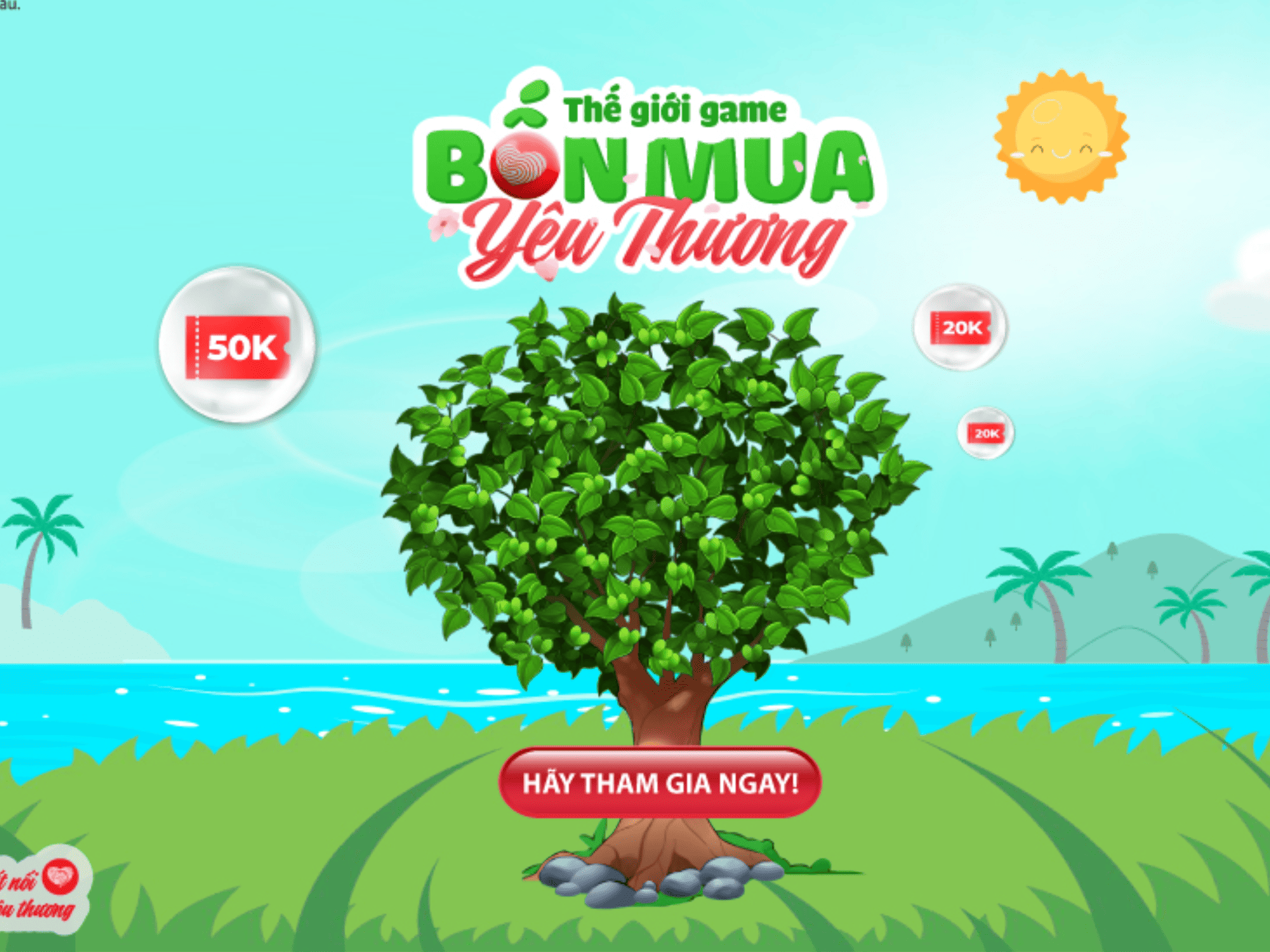
At the center of the experience is a tree that grows over time.
Users collect “Yêu Thương” by completing tasks within the system. With each interaction, they are “watering” and nurturing their tree. This is not only visual feedback, but emotional feedback.
Instead of just seeing numbers increase, users see tangible growth – a tree becoming fuller, greener, and more complete over time.
Leap Studio focused on designing visuals so that each stage of growth feels meaningful and rewarding.
Step 2 – Design Visuals That Reflect Care, Not Pressure
Unlike many gamification systems driven by speed or competition, Bốn Mùa Yêu Thương is built with a gentle and calming tone. Visual design plays a key role in this.
The tree, seasonal transitions, and overall environment are crafted to feel:
Soft and approachable
Natural and gradually evolving
Emotionally warm
Each stage of the tree is not just a visual change, but a different emotional state.
Users are not pushed to act, they are invited to return.
Leap’s role was to ensure that every visual element aligns with this spirit.
Step 3 – Balance Personal Growth With Light Competition
While the experience focuses on nurturing, it still includes a layer of competition.
Users can see:
Those who receive the most “Yêu Thương”
Those who complete progression the fastest
However, competition is not the core driver. It acts as a supporting layer, while the main motivation comes from watching one’s own tree grow over time. This balance keeps users engaged without creating pressure.
Step 4 – Create A Cohesive Emotional Journey Through Art
Since Leap Studio was responsible for the art, the challenge was not gameplay mechanics, but emotional consistency.
Every visual element had to tell the same story:
Growth
Care
Time
From early-stage seedlings to fully grown trees, from subtle animations to reward moments, everything needed to feel connected.
The result is not just a game interface, but an emotional journey.
Expert Insights
Bốn Mùa Yêu Thương presents a different perspective on gamification. Not all engagement comes from challenge or rewards.
Some experiences retain users through meaning. When users can see growth, feel progression, and emotionally connect with the experience, they stay not because they have to, but because they want to.
In such systems, visual design is not decoration. It is the experience itself.
Team / Credits
- Art Team (Leap Studio) – Designed the entire visual system and progression experience
- Game Designers (Woay) – Built gameplay mechanics and progression systems
- Developers (Woay) – Developed and integrated the system
Leap does not just design visuals. We design how users feel inside a product.
CTA
Not every gamification needs to be fast, intense, or competitive.
Sometimes, softer experiences create deeper connections.
Talk to Leap Studio – to build gamification experiences that truly matter.