
What Is Gamification? The Ultimate Guide to Fundamentals, History, and Meaning
Have you ever earned points on a coffee app, completed a progress bar on LinkedIn, or received a badge after finishing an online course?
If so, you have already experienced gamification, even if you didn’t realize it.
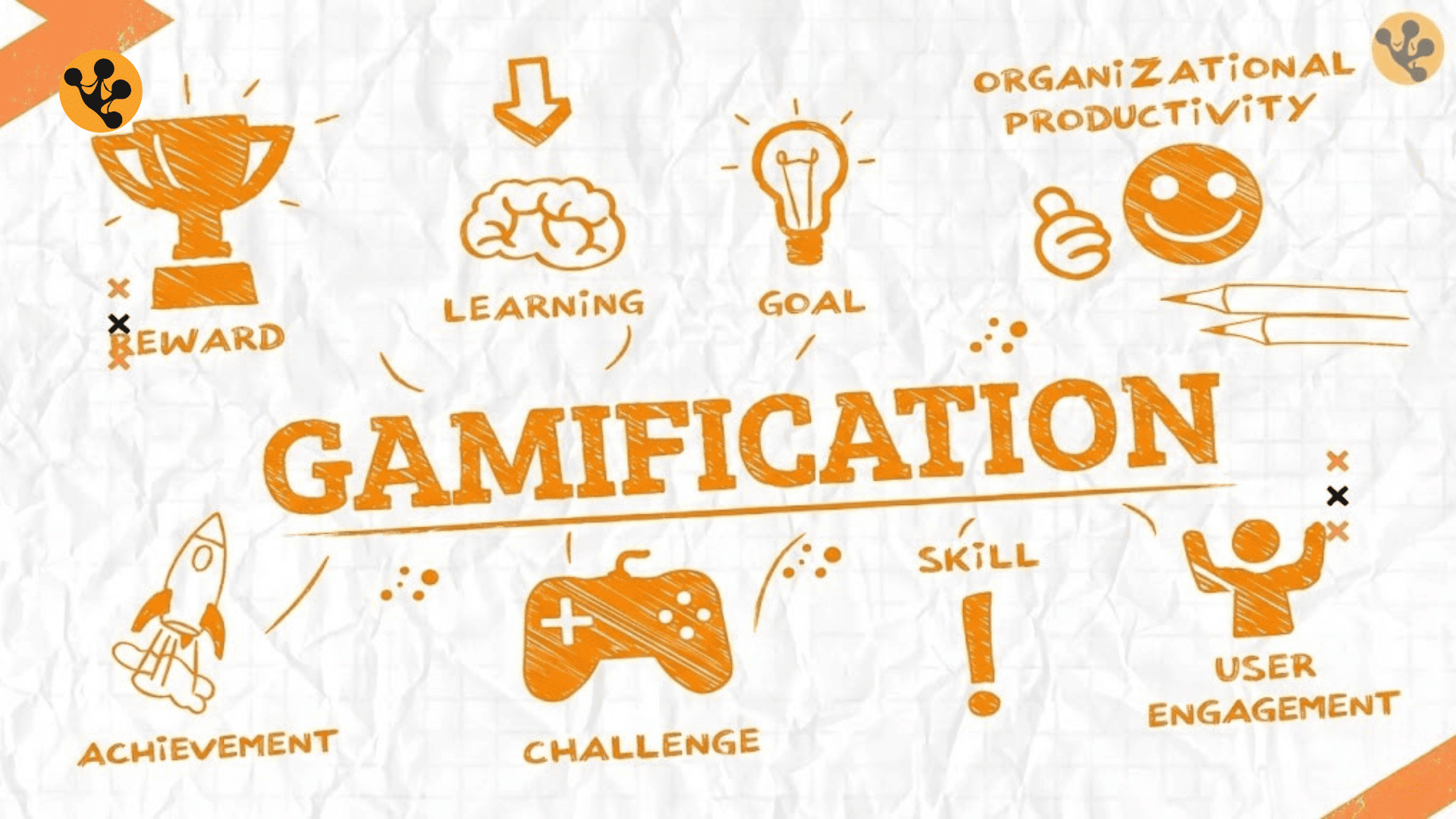
Gamification is the application of game-design elements and game principles in non-game contexts to improve user engagement, motivation, learning, and behavior.
In this guide, we will explore:
- The exact definition and meaning of gamification
- How gamification differs from game design
- Its historical evolution
- The core elements and psychology behind why it works
This article is designed as a foundational resource for students, developers, marketers, and anyone new to the concept.
What Is the Definition of Gamification?
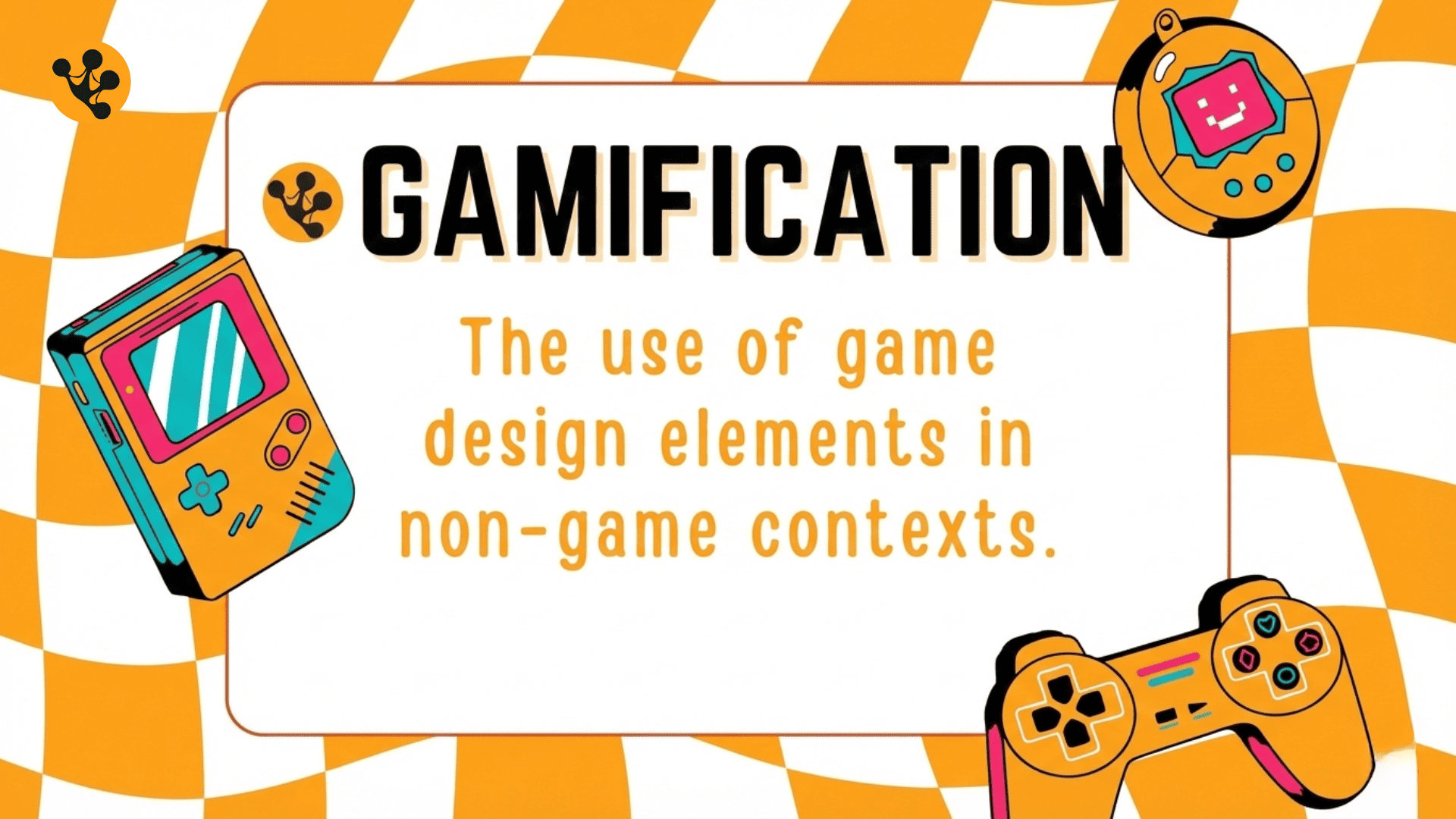
Gamification is commonly defined as: “The use of game design elements in non-game contexts.”
Let’s break this definition down into three essential components.
Game Design Elements
These are the building blocks borrowed from games, such as:
- Points and experience (XP)
- Badges and achievements
- Levels and progression systems
- Leaderboards and rankings
Non-Game Contexts
Gamification is applied outside traditional games, including:
- Business and marketing platforms
- Education and e-learning systems
- Health and fitness apps
- Software products and developer tools
The Goal: Engagement and Behavioral Change
The purpose of gamification is not entertainment alone.
It aims to:
- Encourage specific user behaviors
- Increase motivation and participation
- Improve retention and long-term engagement
For software developers and product designers, gamification is a tool to enhance UX/UI, guide user actions, and make digital experiences more engaging and intuitive.
H2: How Is Gamification Different from Game Design? (Gamification vs Game Design)
A common misconception is that gamification means building a full game.
In reality, gamification and game design serve different purposes.
Key Distinction
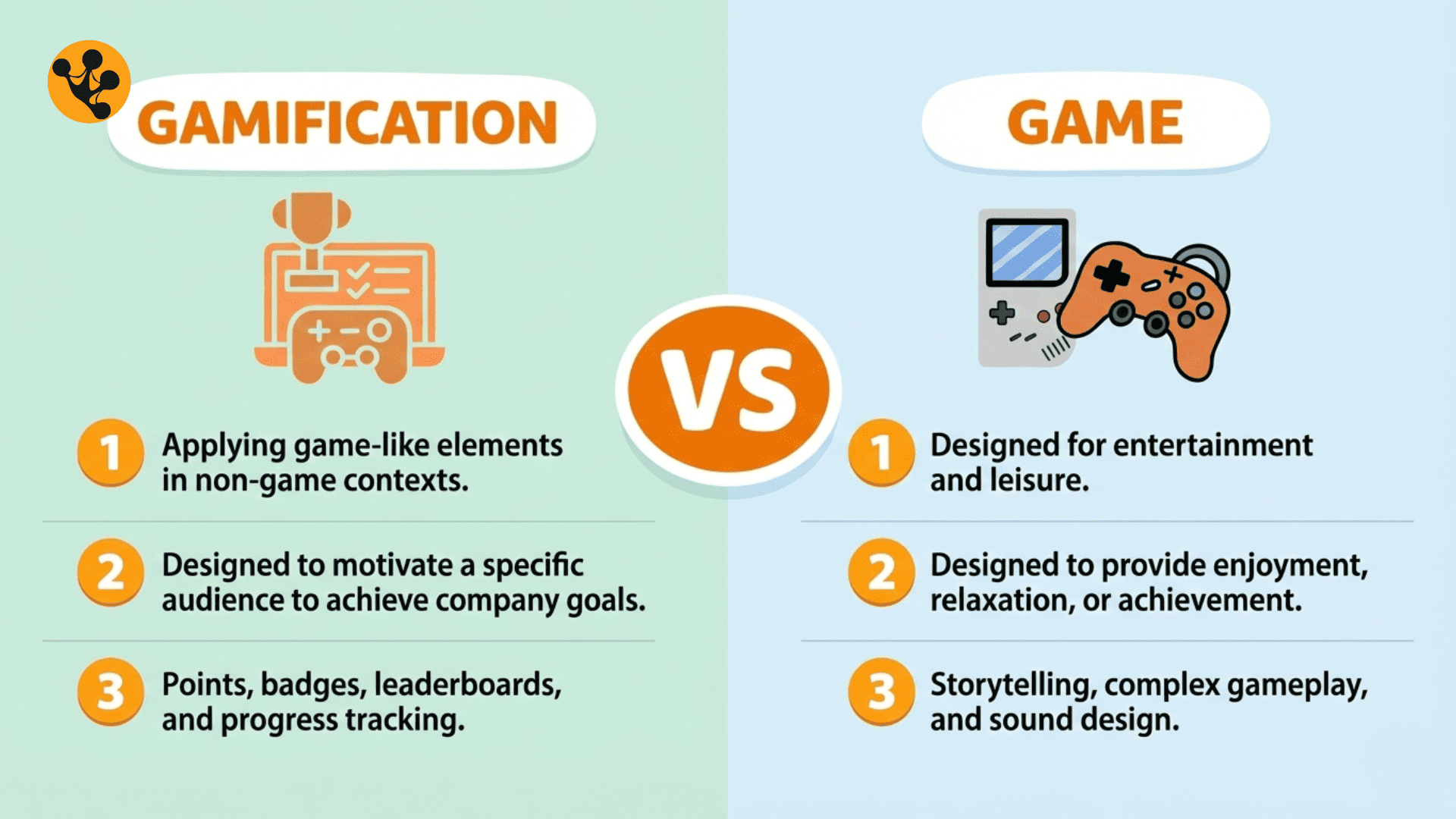
- Game design creates complete, self-contained games for entertainment.
- Gamification adds motivational layers to existing systems to encourage specific behaviors.
Gamification vs Serious Games
- Serious games are full games created for training or simulation purposes (e.g., flight simulators).
- Gamification does not replace the original system; it enhances it
What Is the History of Gamification?
Gamification may feel like a modern concept, but its roots go much deeper.
Early Foundations (Pre-Digital Era)
- Loyalty stamp programs such as S&H Green Stamps
- Merit badges in organizations like the Boy Scouts
- Sales competitions and reward systems
The Digital Emergence (2002–2010)
- The term “gamification” was coined by Nick Pelling in 2002.
- Early digital examples appeared in web platforms and location-based services like Foursquare.
Mainstream Adoption (2011–Present)
- Widespread use in corporate training, productivity tools, and education
- Popular platforms like Duolingo demonstrated how gamification could support long-term learning
- A shift away from simple “pointsification” toward meaningful engagement and motivation
What Are the Core Elements of Gamification?
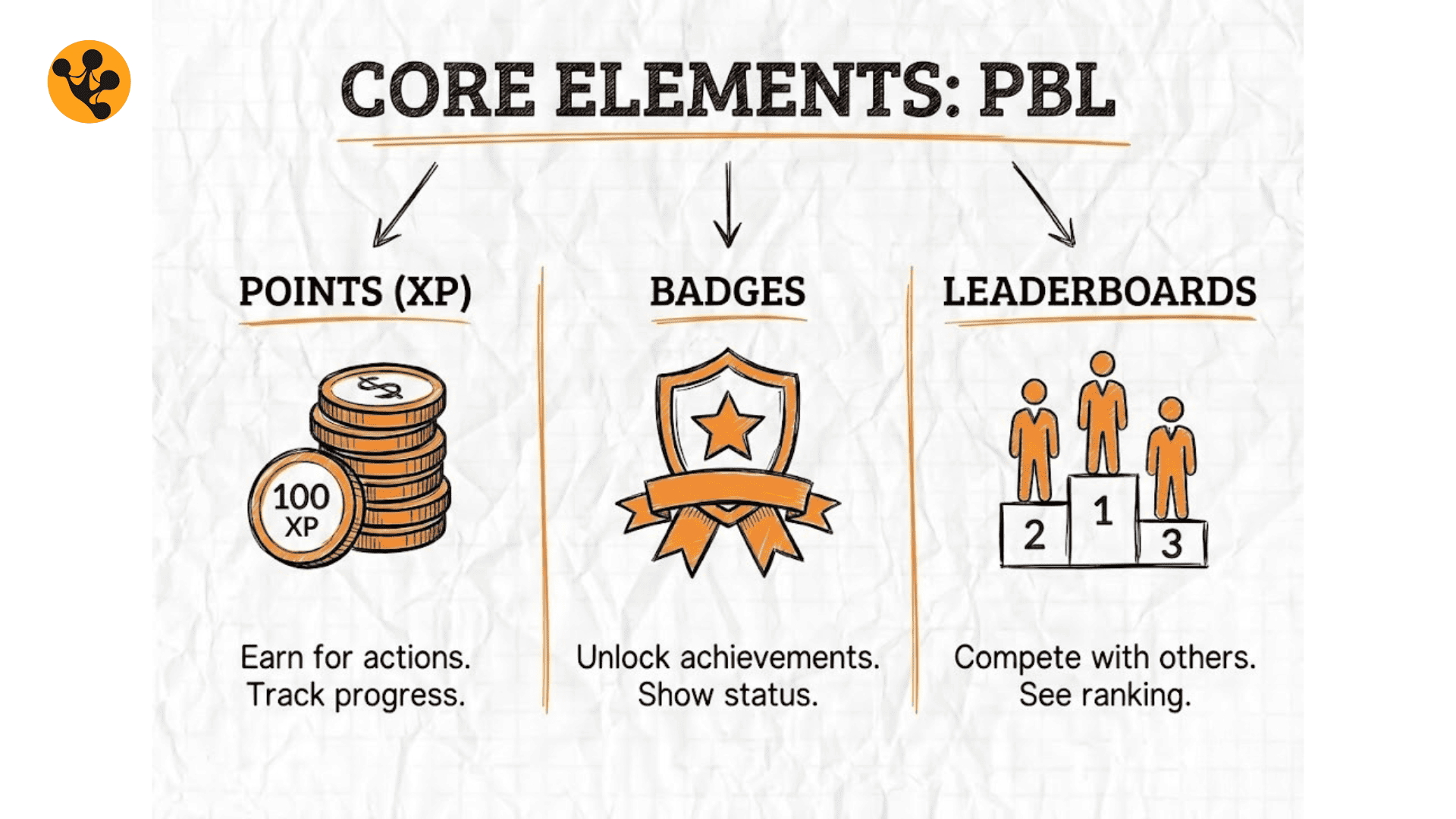
Gamification systems are typically structured around three layers.
Mechanics (The Rules)
These define how the system works:
- Points (XP)
- Levels
- Badges
- Leaderboards
Dynamics (User Behavior Over Time)
These emerge as users interact with the system:
- Rewards and progression
- Status and recognition
- Achievement and mastery
- Self-expression and contribution
Aesthetics (The Experience)
This is how gamification feels to the user:
- Visual design and UI
- Sound, motion, and feedback
- Overall emotional response
Why Does Gamification Work? The Psychology Behind It
Gamification works because it aligns with fundamental human motivations.
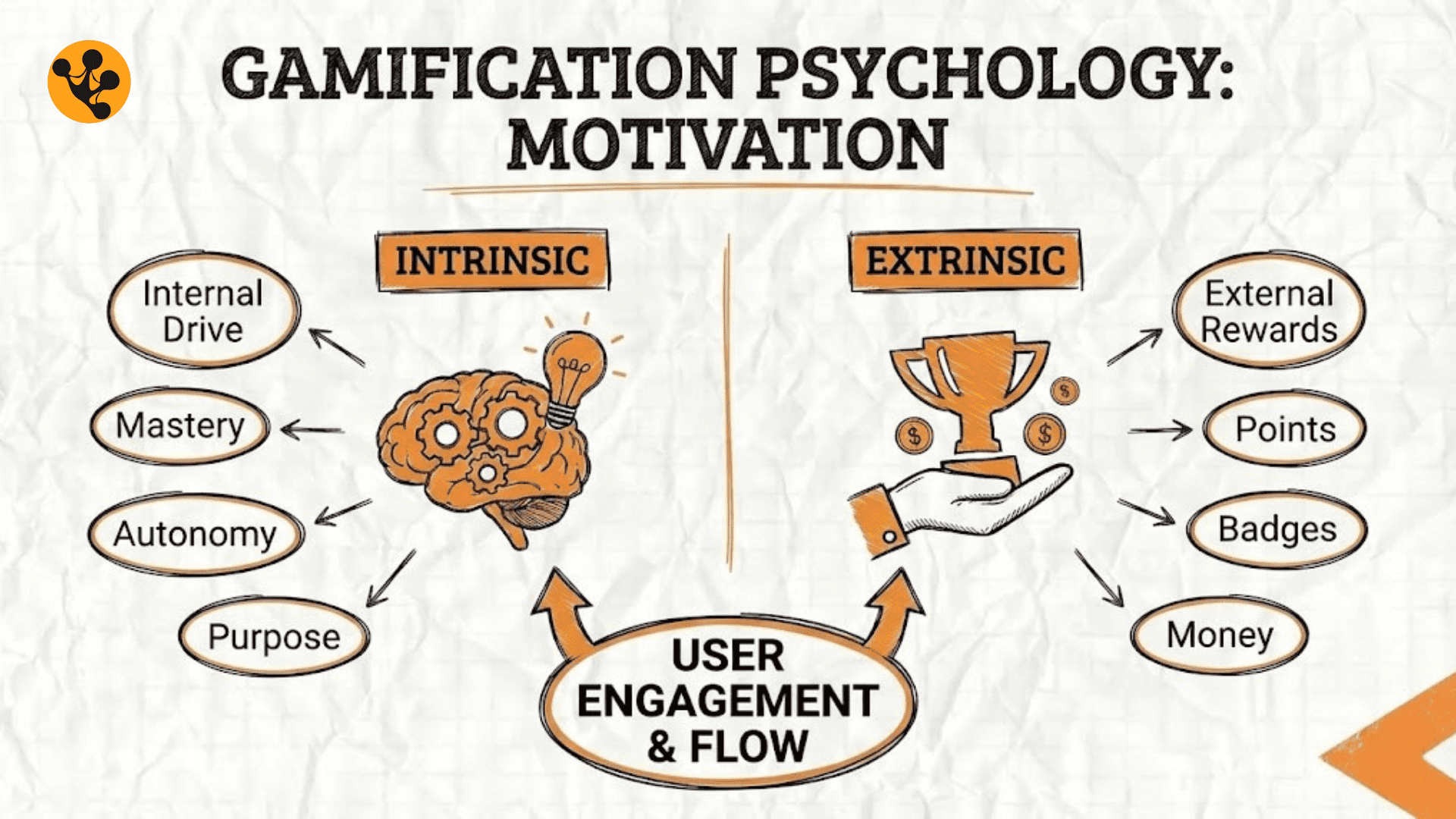
Intrinsic vs Extrinsic Motivation
- Extrinsic motivation: rewards, points, discounts
- Intrinsic motivation: curiosity, challenge, enjoyment, mastery
Long-term engagement relies more on intrinsic motivation.
Self-Determination Theory (SDT)
Effective gamification supports three psychological needs:
- Autonomy: users feel in control of their choices
- Competence: users see progress and improvement
- Relatedness: users feel socially connected
The Flow State
When challenge and skill are balanced, users enter a flow state—a mental zone of deep focus and engagement.
H2: What Are the Common Misconceptions About Gamification?
“Gamification is just badges and points”
Points, badges, and leaderboards alone are not enough.
Without strategy and user understanding, they quickly lose effectiveness.
“Gamification is manipulative”
Poorly designed systems can feel exploitative, but ethical gamification focuses on transparency, value, and user benefit.
“Gamification is only for kids”
Gamification is widely used in:
- Enterprise software
- Employee training systems
- Financial and productivity tools
Conclusion: Gamification Is a Tool, Not a Gimmick
Gamification is not about turning everything into a game.
It is a structured approach to influencing behavior, improving engagement, and guiding users through meaningful experiences.
For developers, designers, and product owners, the most important lesson is this:
Understanding user motivation matters more than any single mechanic.
The next time you use an app, pay attention—you may start noticing gamification everywhere.

“I’m Paul Nguyen, I’m a Growth & Product Marketing Leader and currently the General Manager at LEAP Studio. With over six years of experience across fintech platforms, tech startups, and Web3, I specialize in building data-driven growth strategies, optimizing conversion funnels, and integrating AI into marketing to drive sustainable business scalability.”

Leave a comment