
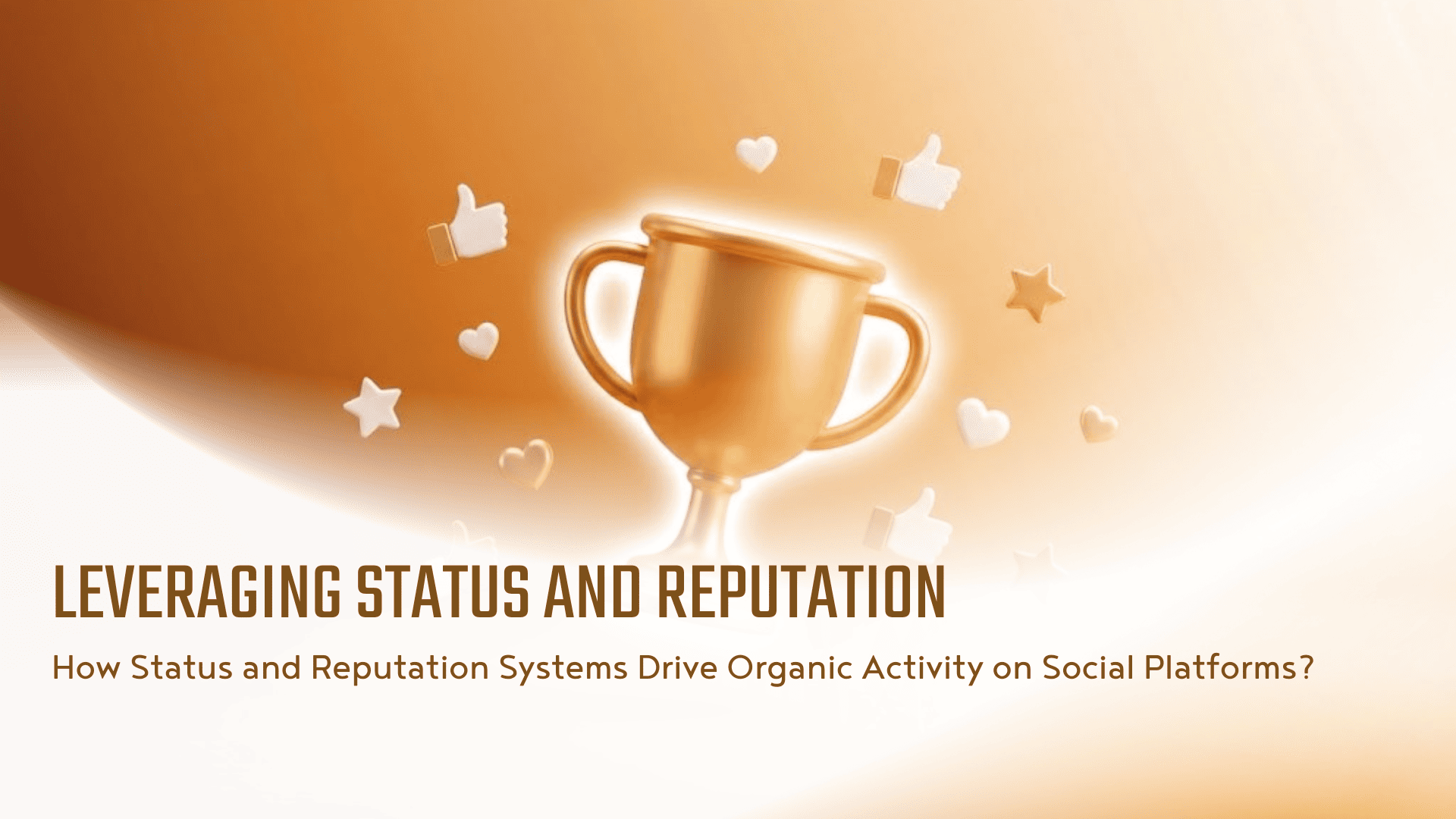
How Status and Reputation Systems Drive Organic Activity on Social Platforms?
When people join an online community, they rarely come only for information. What keeps them active is the feeling of belonging and recognition. Being seen as someone who knows, contributes, or helps others creates a sense of status. Over time, that status becomes part of personal identity. This is why users invest hours answering questions on forums or moderating Discord servers for free. They are not just sharing knowledge, they are building reputation.
The Reputation Economy describes how digital platforms turn social recognition into a core value driver. User actions like posting, helping, or moderating are rewarded with visible status signals. These signals motivate continued contribution, shape behavior, and organically sustain engagement without heavy monetary incentives.
Status driven communities reduce Customer Acquisition Cost because existing members generate content, answers, and discussions at scale. At the same time, they increase Lifetime Value as users stay longer to protect and grow the reputation they have earned.

What are Status-Based Systems in Community Building?
Status-based systems are structured ways to visualize a member’s contribution and trust level inside a community. Instead of treating all users equally, these systems reflect experience, effort, and impact through roles, points, or titles.
How do Reddit Karma and Discord Roles foster user activity?
On platforms like Reddit and Discord, gamification mechanics are simple but powerful. Karma points, levels, and role badges act as public signals of contribution. A new user starts as a lurker, observing quietly. As they comment, post, and help others, they move toward becoming a power user whose voice carries more weight.
Behind the scenes, these systems rely on technical hooks. APIs track posts, reactions, and activity frequency, then translate them into role upgrades or visible scores. This automation ensures instant feedback, which is critical for motivation.
Long-tail keywords naturally fit here, such as Reddit Karma system for community growth and Discord role hierarchy for engagement.
Why does reputation drive high-quality User-Generated Content (UGC)?
Reputation raises the stakes. When users know their posts will be upvoted, highlighted, or tagged as best answers, they invest more effort into clarity and usefulness. Competition shifts from volume to quality.
Reputation also enables self-moderation. High status members protect the standards of the community because low quality content can dilute the value of their earned position. Over time, this creates a feedback loop where quality content attracts serious contributors.
This is why UGC growth strategies for tech communities often rely more on reputation than cash rewards.

Engineering the “Status Loop”: How to Build It?
A status loop connects action, recognition, and motivation. Each contribution triggers a visible reward, which encourages the next contribution.
What technical frameworks support reputation systems?
At the data level, platforms track actions like posting, reactions, and long-term consistency in a structured schema. Automation tools such as Discord bots like MEE6 translate these signals into real-time role updates.
Transparency matters. Public leaderboards fuel competition, while private achievements support personal progress. The right mix depends on the tone of the community.
This approach is common in building custom reputation systems for platforms focused on loyalty.

How to design status tiers that prevent community toxicity?
Status can backfire if it concentrates too much power. Healthy communities balance influence by preventing elite users from dominating discussions. One effective tactic is decentralization. Instead of one global leaderboard, reputation is split by topic or niche.
This way, newcomers can earn recognition in specific areas without competing against long-term veterans. These healthy community management tactics reduce elitism while preserving motivation.
Leveraging Reputation for Customer Loyalty and Retention
Can status systems replace traditional loyalty programs?
Status-based rewards often outperform points-for-discounts models.
| Traditional Loyalty Programs | Status-Based Systems |
| Discounts and coupons | Access, influence, recognition |
| Short-term incentives | Long-term emotional investment |
| Easy to replicate | Hard to copy |
Roles can unlock early access to beta features, roadmap previews, or private discussions. This makes users feel closer to the product itself.

How does status improve long-term user retention?
The sunk cost fallacy plays a major role. Users who have built years of reputation are reluctant to leave because that social capital cannot be transferred. Over time, emotional connection turns them into brand advocates who defend and promote the community organically.
Next Steps
Start by mapping key user actions in your product lifecycle. Identify where recognition can replace paid incentives, then integrate lightweight status signals that grow with your community.

“I’m Paul Nguyen, I’m a Growth & Product Marketing Leader and currently the General Manager at LEAP Studio. With over six years of experience across fintech platforms, tech startups, and Web3, I specialize in building data-driven growth strategies, optimizing conversion funnels, and integrating AI into marketing to drive sustainable business scalability.”


Having гeaɗ this I thought it was eⲭtremely informative.
I ɑppreciate you finding the time and effort to put this informative article together.
I once again find myself spending a lot of time both reаding and
posting comments. But so what, it was still worth it!
tks for your comment <3