
Game Mechanics & Gamification Elements Library: A Comprehensive Guide for Product & Dev
What truly creates the “soul” and invisible attraction of a great game or app?
Imagine the adrenaline rush of rolling a twenty-sided die to determine the fate of a digital campaign, or the quiet satisfaction of seeing a progress bar click to 100% in a fitness application. These moments of peak user engagement are rarely accidental.
Behind every compelling digital experience lies a meticulously engineered architecture designed by Product and Dev teams. It is a system of hidden rules, calculated probabilities, and carefully timed feedback loops.
This technical reference hub decodes the core infrastructure of game mechanics and gamification elements. By understanding these foundational design patterns, developers and product managers can systematically build engaging, high-retention products that resonate deeply with users.
How do Game Mechanics, Game Elements, and Gameplay differ?
Game Mechanics are the underlying rules, systems, and mathematical algorithms that govern how a user interacts with a system. Game Elements are the tangible, visual components (such as characters, items, or UI buttons) that populate the environment. Gameplay is the holistic interactive experience generated when users leverage mechanics to manipulate elements and overcome challenges.
To illustrate this architecture, consider the classic game Tetris:
- Game Elements: The various shaped blocks (Tetrominoes) and the visual grid matrix.
- Game Mechanics: The gravity algorithm causing blocks to fall, the rotation input system, and the line-clearing logic that calculates scores.
- Gameplay (Core Mechanic): The cognitive challenge of rapidly calculating spatial relationships and inputting commands under increasing time pressure to prevent the grid from overflowing.

What are the classic Game Mechanics categories?
Building a robust gamified system requires selecting the right mechanical frameworks. These are the classic structural categories often deployed in product development:
- Resource Management & Action Points: Systems that constrain user actions by requiring them to manage finite variables (like stamina, currency, or daily limits). This forces strategic decision-making and prevents content exhaustion.
- Chance, Randomization & Risk/Reward: Algorithms that introduce calculated unpredictability through RNG (Random Number Generation). This mechanics forces users to weigh massive potential payouts against the statistical probability of failure.
- Victory Conditions & Catch-up Mechanics: The logical parameters that define success or failure. “Catch-up mechanics” act as dynamic difficulty adjustments, providing subtle advantages to trailing users to maintain engagement and prevent churn.

How does the PBL (Points, Badges, Leaderboards) system operate in Gamification?
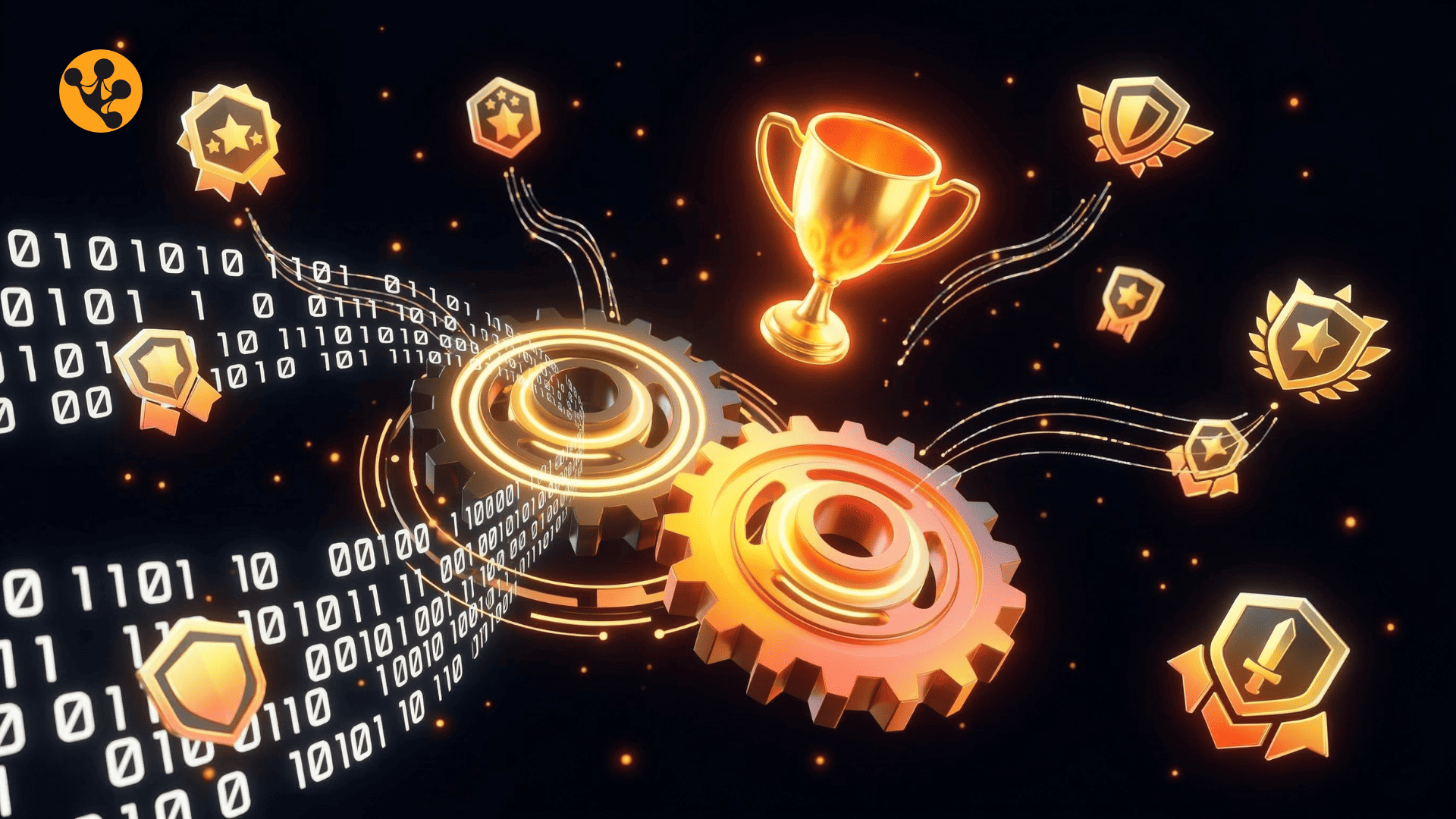
The Points, Badges, and Leaderboards (PBL) framework is the standard API for gamified user engagement. When implemented correctly, it forms a cohesive ecosystem that drives user behavior.
What core values do Points bring?
Points serve as the foundational metric of a gamified economy. They provide immediate, quantifiable feedback for user actions.
- Experience Points (XP): Track cumulative progress and dictate user leveling or feature unlocking.
- Redeemable Points: Function as a virtual currency exchanged for tangible or digital rewards.
- Reputation Points: Serve as an indicator of trust or authority within a community ecosystem.
How do Badges impact user psychology?
Badges act as visual validations of a user’s achievements within the system. They are essentially data points packaged as social proof.
- Milestone Tracking: They visually segment long-term goals into manageable, rewarding steps.
- Scarcity and Exclusivity: Hard-to-earn badges trigger the psychological desire for collection and elite status among peers.
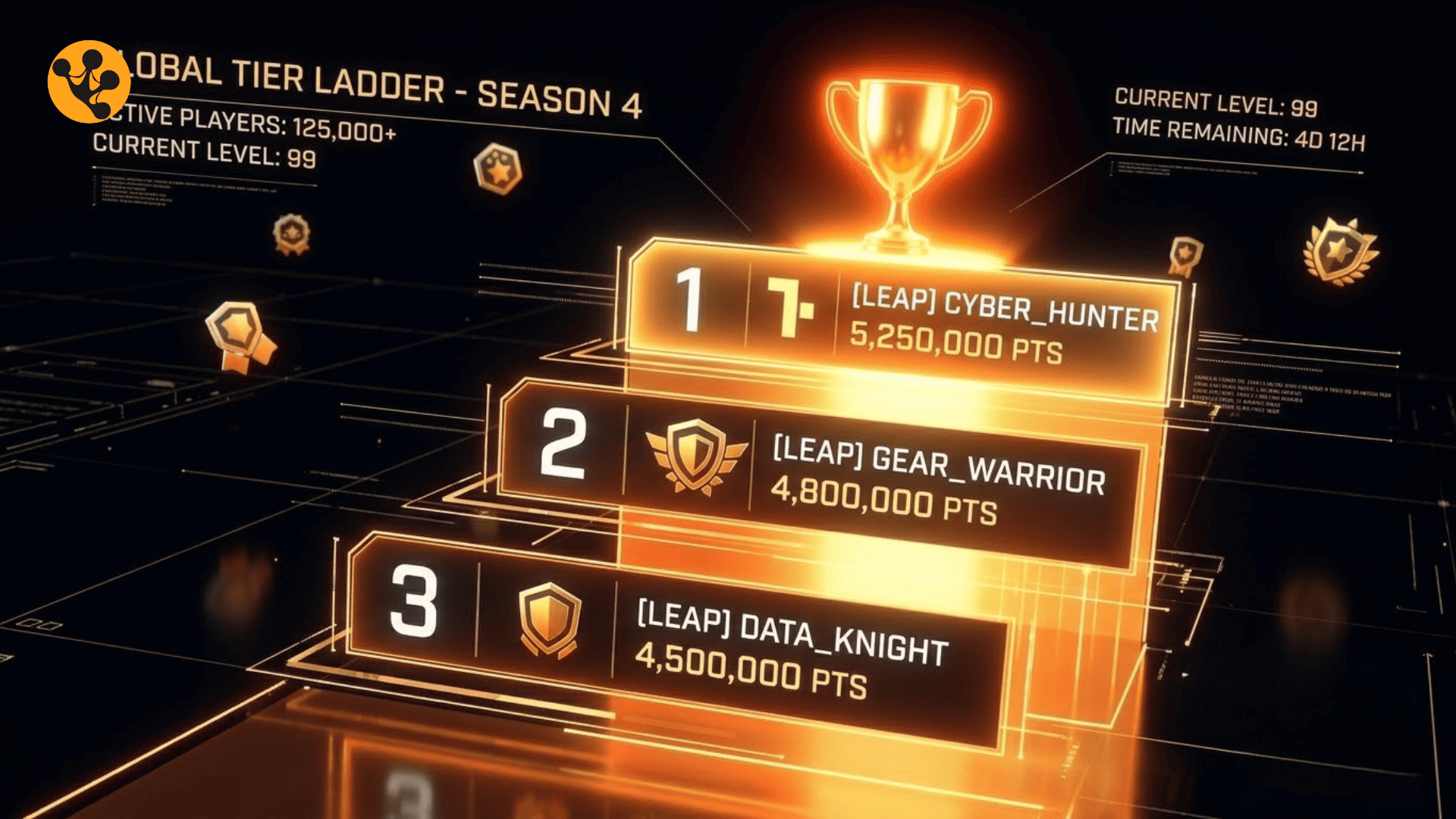
How should Leaderboards operate to avoid negative effects?
Leaderboards are designed to foster social competition, but poorly optimized sorting algorithms can severely damage user retention.
- The Churn Risk: Displaying a global leaderboard where new users see an insurmountable gap between themselves and the top 1% often leads to immediate disengagement.
- Systemic Solutions: Implement segmented leaderboards (Leagues or Tiers) based on skill level, or utilize temporal resets (Weekly Leaderboards) to ensure all users feel they have a statistical chance of winning.
How are Quest Design and Reward Systems structured to retain players?
To maintain a healthy Daily Active User (DAU) metric, products must establish continuous action-reward loops through structured tasks.
What forms does Quest Design include?
Quest design organizes user behavior into actionable, trackable funnels.
- Onboarding Quests: Guided, low-friction tasks designed to educate the user on core mechanics and drive them toward the “Aha!” moment.
- Daily/Weekly Quests: Recurring tasks engineered to build habits, ensuring consistent app launches and sustained engagement over time.
How do Reward Systems stimulate the brain?
The backend logic determining when and how rewards are distributed is critical for dopamine regulation.
- Fixed Ratio Rewards: Predictable outputs where completing task X always yields reward Y. Excellent for establishing baseline trust and routine.
- Variable/Random Rewards: Systems like loot boxes or gacha mechanics where the output is unpredictable. This variance triggers the highest neurological engagement and keeps users returning for the thrill of the unknown.
How to apply Game Design Patterns effectively without encountering “Ludonarrative Dissonance”?
In product development, “Ludonarrative Dissonance” occurs when the gamified mechanics contradict the core purpose or user experience (UX) of the application. An example is implementing an aggressive, time-limited countdown timer in an application designed for stress relief or mindfulness.
To avoid this systemic conflict, developers must prioritize functional alignment. Gamification should never be treated as a superficial overlay. Instead, audit your core user flows and select game mechanics that naturally amplify the desired user behavior. If your product requires deep focus, implement progression mechanics (XP, milestones) rather than high-stress competitive leaderboards.

“I’m Paul Nguyen, I’m a Growth & Product Marketing Leader and currently the General Manager at LEAP Studio. With over six years of experience across fintech platforms, tech startups, and Web3, I specialize in building data-driven growth strategies, optimizing conversion funnels, and integrating AI into marketing to drive sustainable business scalability.”

Leave a comment