
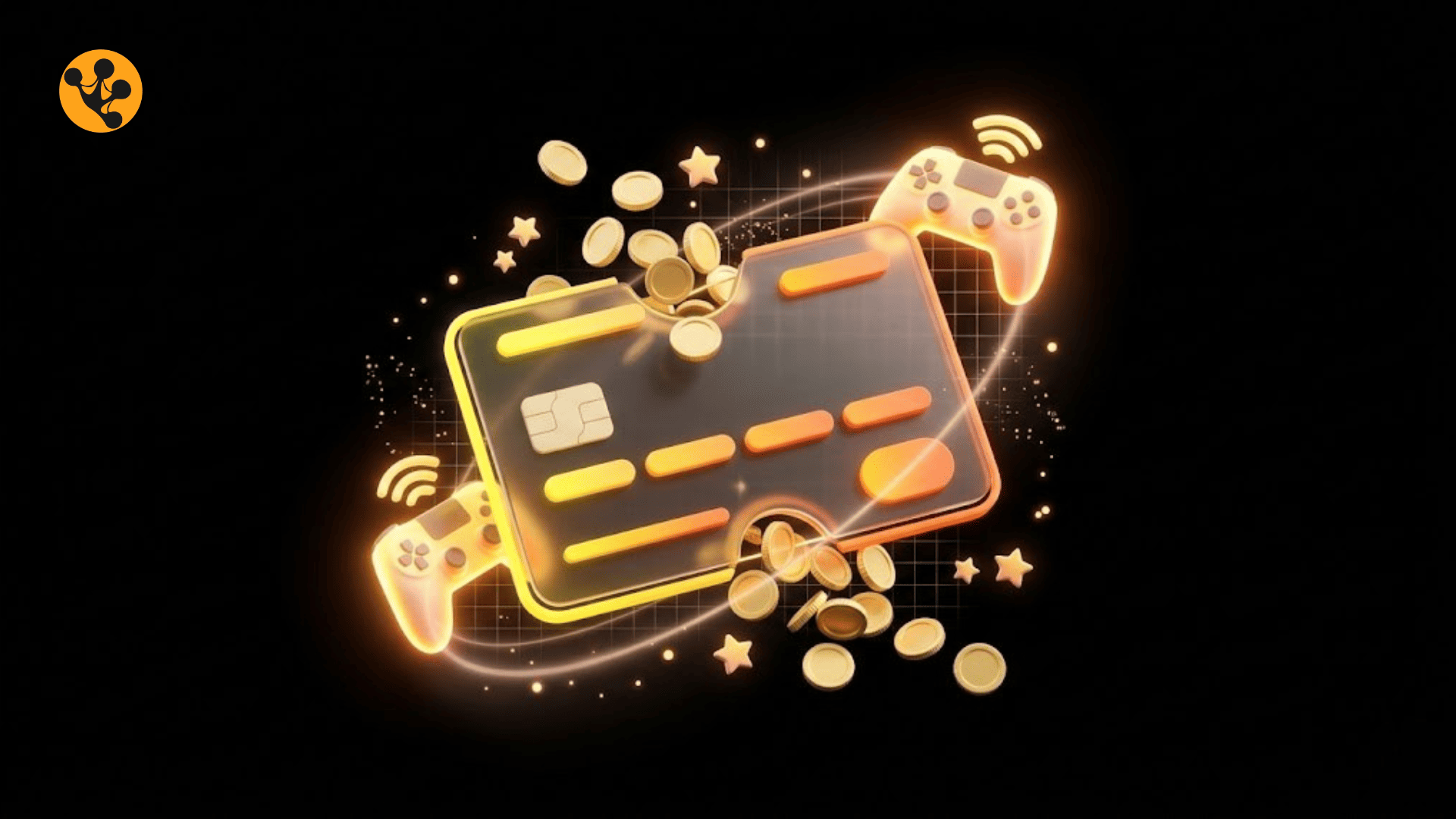
Building a Credit Card Game Economy: A Comprehensive Guide to Balancing Engagement & Reward Costs
In the fiercely competitive landscape of digital finance, attracting and retaining customers is no longer just about offering good products. Financial institutions are seeking innovative methods to make the financial experience more engaging and memorable. One prominent trend is applying Game Economy principles to credit card products, creating a reward system that not only delivers real value but also strongly motivates user interaction. This article will provide a comprehensive guide on how to build and balance an effective Credit Card Game Economy, from understanding core elements to strategies for managing reward costs.
1. Introduction: Game Economy & Credit Cards
To fully grasp the potential of combining these two fields, we need to understand the definition and operational mechanisms of each concept. A Game Economy is an internal economic system within a game where players interact with virtual currencies, resources, and rewards to achieve objectives. Meanwhile, a credit card is a familiar financial tool that allows users to spend now and pay later, playing a crucial role in the modern financial ecosystem. Their intersection lies in the ability to apply psychological and motivational principles from games to encourage desired financial behaviors.
A well-designed Game Economy comprises several core components that work in harmony to create an engaging and sustainable experience for players. Understanding these components is the first step to effectively translating them into a financial context, especially for products like credit cards. These elements not only shape how players interact with the virtual world but also influence perceived value and motivation to continue participating.
- What is a Game Economy? It’s the internal economic system of a game, managing the creation, distribution, consumption, and exchange of virtual assets. Core components include: virtual currencies (points, gold, diamonds), resources (items, energy), rewards (achievements, rare items), and progression systems (levels, quests).
- What is a Credit Card? It’s a financial tool that allows users to spend within an allocated limit and repay later. Its mechanism is based on creditworthiness, offering benefits such as convenience, flexible spending, and various promotional programs or loyalty points.
- The Intersection: Game economic principles can be applied to credit card products to enhance interaction, create usage incentives, and build loyalty. Transforming financial transactions into “quests” or “challenges” can make the credit card experience more enjoyable and engaging, going beyond traditional loyalty programs.
2. Benefits of Applying Game Economy to Credit Cards
Integrating game economy elements into credit card programs offers numerous strategic benefits for financial institutions. It not only helps strengthen engagement with existing customers but also serves as a powerful tool to attract new users in an increasingly competitive market. By transforming financial transactions into an enjoyable and goal-oriented experience, banks and fintech companies can create a significant differentiator.
- Enhanced Interaction and Customer Retention: Transforms card usage into an engaging, goal-oriented experience, encouraging customers to interact more frequently with the product and brand.
- Drives Desired Spending Behavior: Designs quests or rewards to encourage frequent card use, spending at specific partners, or reaching certain spending milestones.
- Improves User Experience and Brand Loyalty: Creates a sense of achievement and progress, helping customers feel valued and more connected to the brand.
- Attracts New Customers and Creates a Competitive Advantage: A unique and appealing reward program can be a key differentiator, attracting customers looking for novel financial experiences. Specifically, using formats like bank playable ads can help visually introduce gamified features, capturing attention and increasing conversion potential.
- Addresses Limitations of Traditional Loyalty Programs: Simple point-based programs often lack motivational elements and excitement. A game economy offers greater depth and interactivity.

3. Core Elements of a Credit Card Game Economy
To build an effective Credit Card Game Economy, translating core game elements into a financial context is crucial. Each element must be carefully designed to align with business objectives and user behavior, while ensuring cost sustainability. The flexible combination of these elements will create a diverse, engaging, and capable reward system that fosters positive financial behaviors.
- Virtual Currency/Reward Points: Design a clear reward point system, reasonably value conversion rates (e.g., 1000 points = 10,000 VND), and diverse accumulation mechanisms (points based on spending, transaction type, or partners).
- Progression System/Levels: Establish membership tiers (e.g., Silver, Gold, Platinum) with increasing benefits and privileges at higher levels, encouraging users to strive for advancement.
- Quests/Challenges: Activities that encourage spending (e.g., spend 5 million VND in a month), service usage (sign up for automatic bill payments), or achieving financial goals (maintain a minimum balance).
- Rewards (Virtual & Real): Diversify gifts (vouchers, products), exclusive offers (discounts), experiences (travel, events), and redemption methods (lucky draws, auctions, direct point redemption).
- Transaction/Exchange Mechanism: How users utilize points/rewards to redeem value, possibly through a virtual store, auction system, or direct conversion.
- Social Elements: Integrate features for sharing achievements, leaderboards, friendly competition, or collaboration to achieve common goals, enhancing community engagement and interaction motivation.

4. Strategy for Balancing Engagement & Reward Costs
One of the biggest challenges when implementing a Credit Card Game Economy is ensuring the reward system is attractive enough to drive user behavior while remaining cost-sustainable for the issuer. This requires a deep understanding of reward costs, user behavior analysis, and the application of smart reward valuation models. Leveraging data is key to effectively predicting, managing, and optimizing costs.
- Understand Reward Costs: Accurately value each reward point, estimate total projected costs for rewards, and assess the financial impact on the program’s profitability.
- Analyze User Behavior: Research psychological factors that drive spending and interaction, such as the desire for recognition, a sense of achievement, or immediate benefits.
- Reward Valuation and Allocation Models: Establish reasonable cashback rates, optimize the perceived value of rewards relative to actual costs, and allocate rewards across different customer segments.
- Use Data to Predict and Manage Costs Effectively: Analyze historical data to forecast point redemption rates, participation levels in quests, and adjust reward strategies in a timely manner.
4.1. Cost-Benefit Analysis
To ensure the sustainability of a Credit Card Game Economy program, conducting a quantitative cost-benefit analysis is indispensable. This helps financial institutions clearly evaluate investment effectiveness and make data-driven strategic decisions. Clearly defining cost and benefit items will provide a solid foundation for adjusting and optimizing the program over time.
- Calculate the ROI (Return on Investment) of the game economy program: Compare total benefits gained (increased revenue, reduced marketing costs, increased customer lifetime value) with total costs incurred.
- Evaluate point issuance costs, redemption costs, and operational costs: Includes technology, personnel, reward partner costs, and other related expenses.
- Determine the improved Customer Lifetime Value (CLV) due to the game economy: Measure the increase in CLV through increased card usage frequency, average transaction value, and customer retention rates.

4.2. Sustainable Reward Design Models
Reward design must not only be appealing but also financially sustainable. Smart reward models can encourage desired behaviors without imposing excessive cost burdens. This requires creativity in reward distribution and personalization, leveraging psychological factors to maximize users’ perceived value.
- Tiered and Personalized Rewards: Offer exclusive rewards for each membership level or personalize them based on individual customer spending behavior and preferences.
- Gamified Random Rewards and Limitations: Utilize elements of surprise such as lucky draws, mystery boxes, or limited-time offers to create excitement and prompt quick action.
- Reward Design to Encourage Specific Behaviors: For example, bonus points for spending at strategic partners, cashback for on-time payments, or incentives for referring friends to use the card.
4.3. Behavioral Psychology in Game Economy
Applying behavioral psychology principles is key to designing a truly effective and cost-efficient Credit Card Game Economy. By understanding what motivates people, financial institutions can create powerful incentive mechanisms without having to spend excessively on material rewards. This is a smart approach to optimizing customer interaction and loyalty.
- Scarcity Effect, Endowment Effect, and Progress Effect: Create a sense of exclusivity for rewards, make users feel ownership over their points/levels, and clearly display progress towards goals to maintain motivation.
- The Power of Unexpected Rewards and Habit Formation: Unpredictable rewards often have a stronger impact. Simultaneously, design reward loops to naturally build card usage habits.
- Applying ‘Nudge’ Theory to Encourage Positive Behaviors: Provide suggestions or default options to guide users towards beneficial behaviors (e.g., suggesting on-time payments to avoid penalties and earn rewards).
5. Real-World Examples & Case Studies of Gamification in Finance
Reality has shown that applying gamification to the financial sector is not just a trend but also yields tangible results. Many organizations have successfully made financial transactions and management more engaging through game economy elements. These examples provide deep insights into how ideas can be implemented and valuable lessons learned.
One recent prime example is how apps like Toss have used various forms of playable ads fintech to attract new users. These ads not only introduce the product but also allow users to experience gamified features interactively, enhancing understanding and engagement. This has significantly improved playable ads conversion rates in the financial industry, while also helping banks and fintechs effectively reduce fintech CPI (Cost Per Install).
- Analyze case studies from banks or fintechs that have applied gamification: For example, the TAPTAP app with its multi-partner point accumulation system, or personal finance management apps that encourage saving by setting goals and tracking progress like a game.
- Success lessons and points to note from real-world implementations: Success often comes from understanding the target audience, designing appropriate rewards, and continuously optimizing based on data. It’s important to avoid over-complication or creating a feeling of “being manipulated.”
- Propose creative game economy model ideas for credit cards: Build a virtual city where each transaction is a “building block,” weekly treasure hunts with spending quests, or an exclusive reward auction system using accumulated points.

6. Challenges, Solutions & Risk Management in Implementation
While the potential of a Credit Card Game Economy is immense, implementation is not always smooth. Many challenges need to be carefully considered and addressed to ensure the program’s success and sustainability. From technical issues to legal barriers and user psychology, each aspect requires a suitable risk management strategy and solution.
- Technological challenges and integration with existing systems: Integrating a new game economy system into complex banking technology infrastructure can face compatibility and security difficulties.
- Legal barriers, regulatory compliance, and data security: Ensure the program complies with consumer protection, anti-money laundering, and personal data security regulations.
- User acceptance and behavior change: Not all users will embrace gamification. A clear communication and education strategy is needed.
- Managing fraud risk and abuse of the reward system: Establish strict control mechanisms to prevent exploitation of the point system or incentives.
- Solutions: Phased implementation roadmap (pilot program), collaboration with specialized gamification technology partners, building an effective communication strategy to educate and attract users, and continuous monitoring and adjustment of the system.

7. Measuring, Analyzing & Optimizing the Game Economy System
To ensure that a Credit Card Game Economy is not only engaging but also achieves business objectives, continuous measurement, analysis, and optimization are essential. An effective system needs to be tracked with clear KPIs, utilize advanced data analytics tools, and apply testing methods for continuous improvement. This helps financial institutions better understand program performance and adjust strategies in a timely manner.
- Key Performance Indicators (KPIs): Interaction rate with gamified features, card usage frequency, average transaction value, customer retention rate, point redemption rate, and Customer Acquisition Cost (CAC) or reward cost per transaction.
- Data analysis and reporting tools to monitor performance: Utilize Big Data platforms and Business Intelligence (BI) tools to collect, process, and visualize data.
- A/B testing and experimentation methods for continuous improvement: Test different reward mechanisms, user interfaces, or messages to determine which elements yield the best results.
- Optimization strategy based on user feedback and analytical data: Continuously listen to customers, analyze behavioral trends, and adjust the game economy system to align with market needs and business goals.
Building a Credit Card Game Economy is not just a marketing strategy but also an innovative approach to reshape the financial experience. By combining the appeal of games with financial products, organizations can create an ecosystem where customers are not just users but active players, encouraged and engaged. Skillfully balancing user motivation and reward costs is key to achieving sustainable growth and creating a superior competitive advantage in the digital finance era.


“I’m Paul Nguyen, I’m a Growth & Product Marketing Leader and currently the General Manager at LEAP Studio. With over six years of experience across fintech platforms, tech startups, and Web3, I specialize in building data-driven growth strategies, optimizing conversion funnels, and integrating AI into marketing to drive sustainable business scalability.”



Leave a comment