
AI in Gamification: Optimizing “Personalized” Experiences Through Algorithms
Building a scalable SaaS platform or mobile application is only half the architectural battle; the ultimate challenge lies in long-term user retention. AI in gamification is the seamless integration of artificial intelligence with game mechanics to create fully automated, “personalized” user experiences at scale. By leveraging real-time telemetry data, Machine Learning algorithms dynamically fine-tune push notifications, continuous streaks, and reward systems. This transforms standard software into a “sticky,” highly engaging ecosystem where the user journey adapts instantly to individual behavioral patterns.
What is AI in gamification in software and app development?
AI in gamification involves applying Machine Learning models to gamified systems to process user behavioral data. The system automatically adjusts difficulty levels, rewards, and interaction pathways in real-time, delivering a highly personalized user experience designed to maximize engagement and minimize churn rates.
The paradigm is shifting rapidly from traditional models to intelligent systems:
- Rule-based Gamification: Relies on static, hard-coded logic (e.g., “If user completes Task A, grant 10 points”). It scales poorly across diverse user segments.
- AI-driven Gamification: Utilizes dynamic, self-learning, and predictive models to tailor the experience based on historical and real-time data inputs.
How do Adaptive Learning algorithms and Machine Learning in games work in detail?
To understand the mechanics, we must look at the underlying architecture orchestrating these personalized experiences.
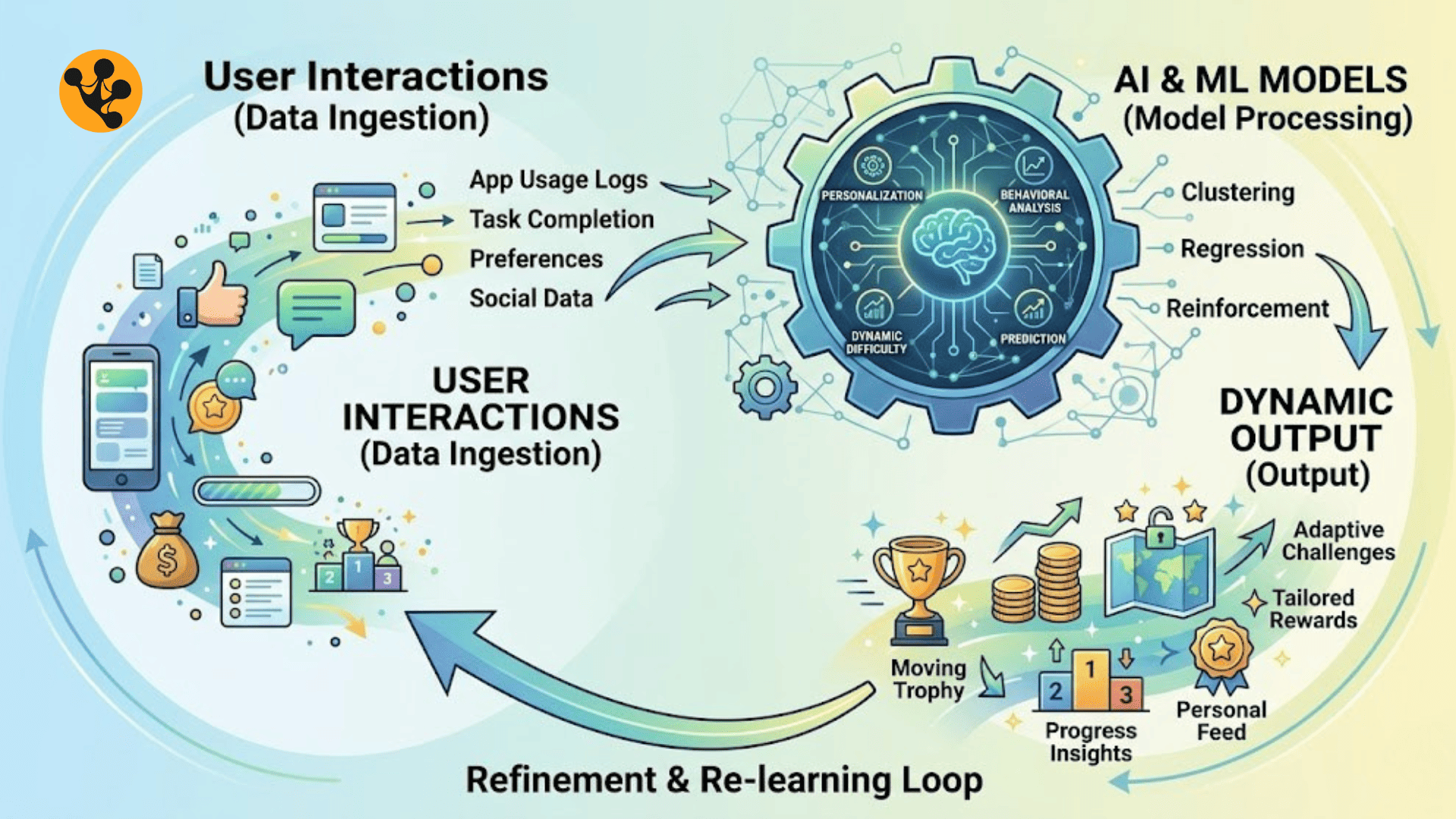
- The Data Pipeline: The system continuously ingests granular user behavior metrics—such as session duration, click-through rates, task completion ratios, and drop-off points. This telemetry data is fed into Predictive Models, creating a real-time feedback loop.
- Adaptive Learning Mechanisms: Instead of a linear progression system, the algorithm automatically routes distinct User Journeys based on segmentation. For example, during Onboarding, new users are assigned micro-tasks with high success probabilities to build early momentum. Conversely, the model identifies “Power Users” and introduces complex, multi-step challenges to prevent plateauing and boredom.
How does AI optimize Push Notifications and Streaks to drive “Sticky” behavior?
How does AI predict the golden moment to send Push Notifications?
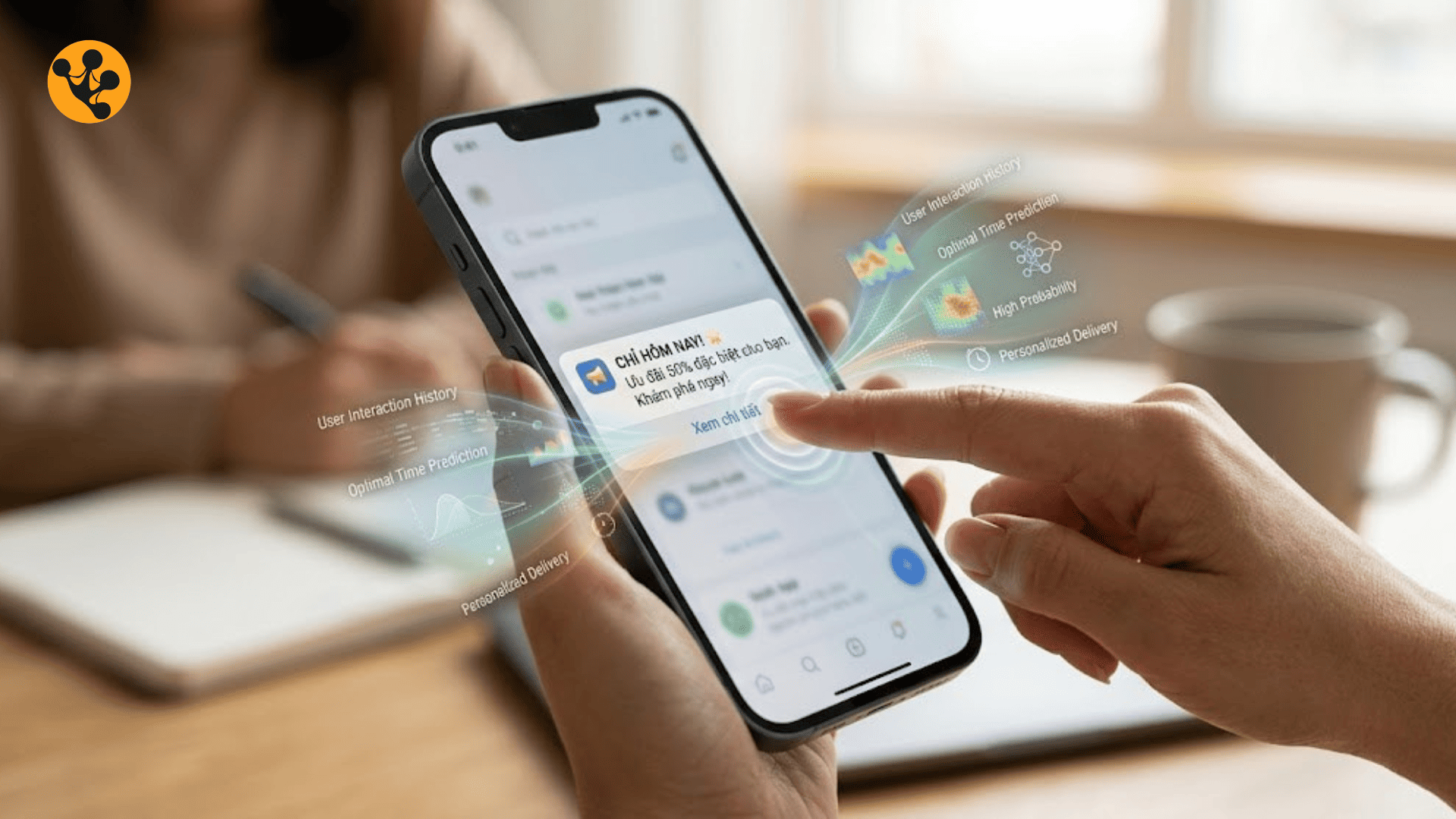
Mass broadcasting is an outdated approach that often leads to notification fatigue and app uninstalls. AI optimizes this by analyzing historical engagement data to identify a specific user’s “golden moment.”
The algorithm triggers notifications at the exact minute a user has the highest statistical probability of opening the app. Furthermore, it automates A/B testing at an individual level, dynamically selecting the messaging framework and tone of voice that historically yields the highest conversion for that specific user.
Why does AI prevent Streaks from breaking?
Streaks rely heavily on the psychological principle of Loss Aversion. However, rigid streak mechanics often lead to permanent churn once a streak is broken. AI mitigates this through Dynamic Difficulty Adjustment (DDA).
If the predictive model detects telemetry indicating a user is at risk of missing a daily engagement, the system dynamically downgrades the required friction. It might suggest a 30-second micro-task instead of the standard 5-minute requirement, allowing the user to maintain their Streak and preserving the habit loop.
How does AI regulate In-app Economies?
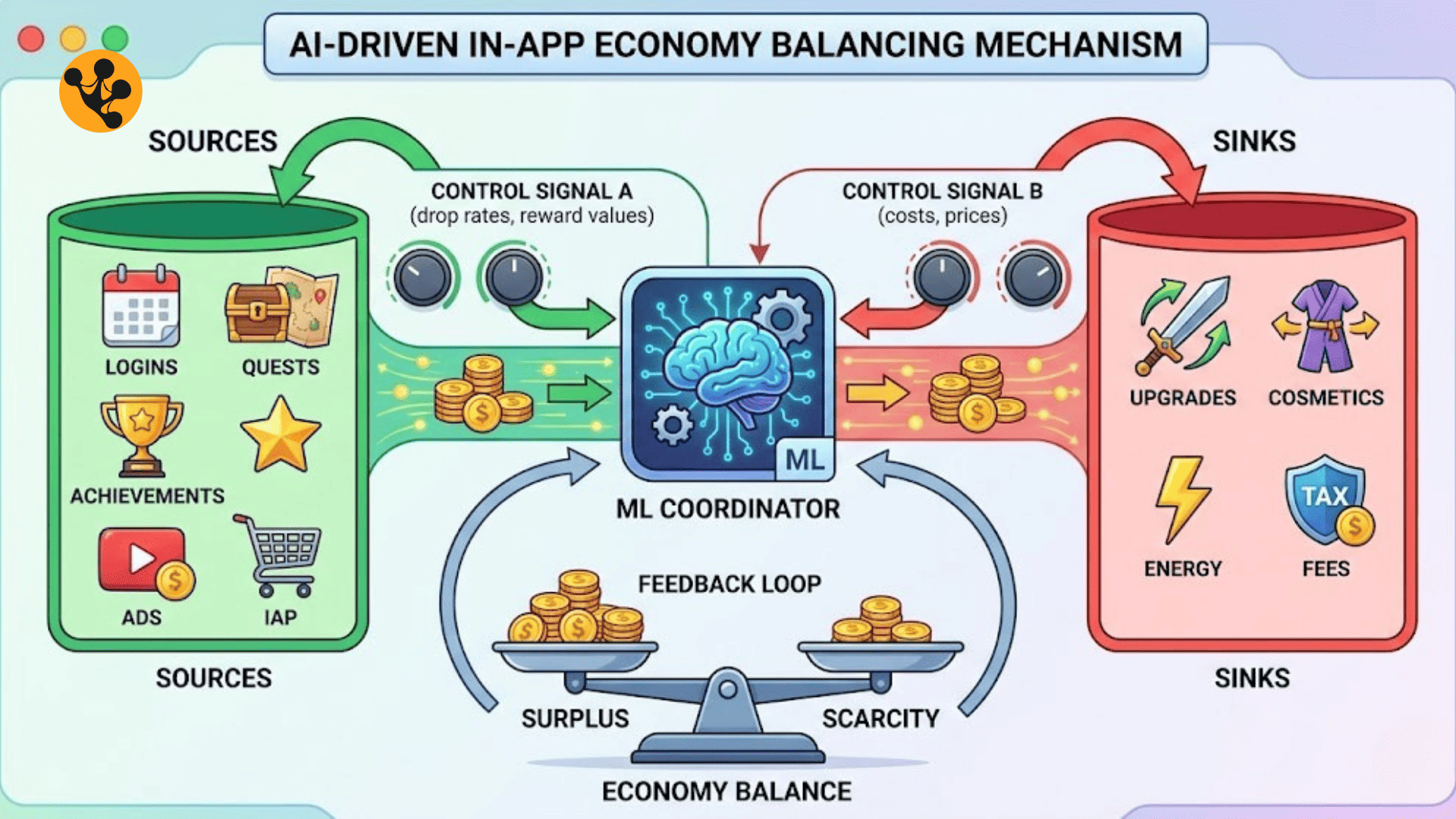
A common failure point in gamified SaaS is the hyper-inflation of reward points or virtual currencies, rendering rewards meaningless. Machine Learning models solve this by acting as a central coordinator within the app’s ecosystem.
- Balancing Sink and Source: The algorithm continuously monitors the macroeconomic health of the platform, automatically balancing the Source (where currency is earned) and the Sink (where currency is spent) to maintain perceived value.
- Dynamic Rewards Mechanism: The system alters the yield and type of rewards based on individual user preferences. If an AI model detects a user is hoarding points, it can dynamically generate high-value, personalized unlockables to stimulate the in-app economy and drive further engagement.
What technological trends will the future of gamification combined with AI shape?
The intersection of generative models and gamification is unlocking entirely new product architectures:
- Procedural Quest Generation: Generative AI allows platforms to dynamically create infinite, contextually relevant quests or achievements in real-time, completely removing the need for manual developer intervention and content updates.
- Conversational NPCs & Assistants: The integration of advanced Natural Language Processing (NLP) models enables the deployment of intelligent virtual assistants or NPCs. These agents interact naturally with users, guiding them through complex SaaS workflows as if they were playing a cooperative multiplayer game.
Expert Takeaway
Integrating Machine Learning into game mechanics is no longer a peripheral “nice-to-have” feature; it is a foundational architectural requirement for SaaS and Mobile Apps aiming to dominate user retention.
Strategic advice for CTOs and Technical Leads: Before investing in complex predictive algorithms, your engineering teams must prioritize infrastructure. Ensure your platform is built on a pristine, unified Data Tracking foundation and a highly scalable Event-driven architecture. AI is only as effective as the real-time data it can reliably consume.


“I’m Paul Nguyen, I’m a Growth & Product Marketing Leader and currently the General Manager at LEAP Studio. With over six years of experience across fintech platforms, tech startups, and Web3, I specialize in building data-driven growth strategies, optimizing conversion funnels, and integrating AI into marketing to drive sustainable business scalability.”
Leave a comment