

Custom Hyper-casual Mobile Game Development Pricing 2026
In an increasingly competitive digital market, many businesses are seeking innovative solutions to enhance customer engagement and optimize internal processes. Custom mobile games, particularly in genres like Hyper-casual and Gamification, are emerging as powerful tools. However, concerns about high costs and lengthy development times often make businesses hesitant.
This article provides an overview of custom mobile game development pricing for 2026, focusing on the Hyper-casual and Gamification segments. It aims to help businesses understand the factors influencing costs, the development process, and, most importantly, the real value these solutions deliver. We are committed to providing in-depth, reliable analysis to help you make informed investment decisions.
Overview of Custom Mobile Game Development Pricing in 2026
The mobile game market is experiencing remarkable growth, not only in the number of players but also in the demand for custom game development for business purposes. Businesses are increasingly recognizing the potential of mobile games in brand building, attracting new customers, and even improving internal work efficiency.
In 2026, custom mobile game development costs are expected to continue fluctuating. While advancing development technologies help optimize some processes, the complexity of features, graphic requirements, and the experience of the development team remain key factors shaping pricing. Understanding these elements is crucial for businesses to plan budgets effectively and seek optimal solutions.

General Factors Affecting Mobile Game Development Costs
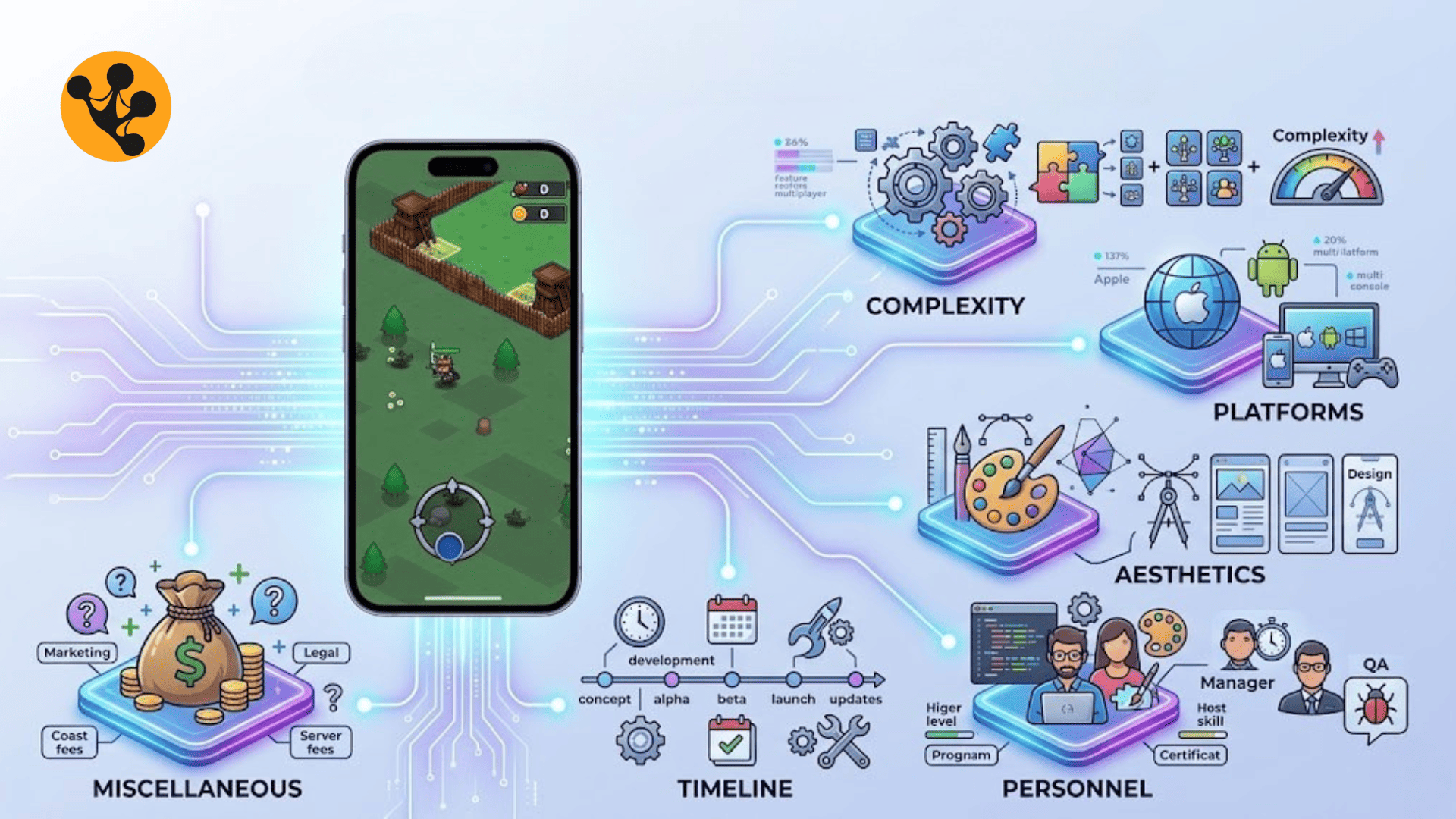
To obtain an accurate quote, numerous factors must be considered. Below are the core components that significantly impact the total cost of a mobile game project:
- Game Features and Complexity:This is the most critical factor. A game with fewer features and simpler mechanics will cost significantly less than a game with complex 3D graphics, multiple levels, diverse character systems, or advanced AI integration.
- Development Platform (iOS, Android, Cross-platform): Developing a game for a single platform (e.g., iOS only or Android only) is typically less expensive than developing for both simultaneously. Cross-platform development using tools like Unity or React Native can save costs and time, but may sometimes affect performance or specific user experience unique to each operating system.
- UI/UX Design and Graphics: Simple 2D graphics are less costly than detailed 3D graphics and complex animations. Meticulously designed, unique user experience (UX) and user interface (UI) also require more effort and cost.
- Development Team Size and Experience: An experienced, highly skilled development team often commands higher rates but delivers superior product quality and a professional workflow, minimizing risks.
- Development Time and Post-Launch Maintenance: The longer the development time, the higher the labor costs. Additionally, maintenance, updates, and bug fixes after the game’s launch are crucial ongoing costs that need to be factored in.
- Additional Costs: These include third-party API integration (e.g., payment, social media), server costs if the game has online features, music/sound effect licensing fees, and marketing costs to promote the game.
Custom Mobile Game Development Process
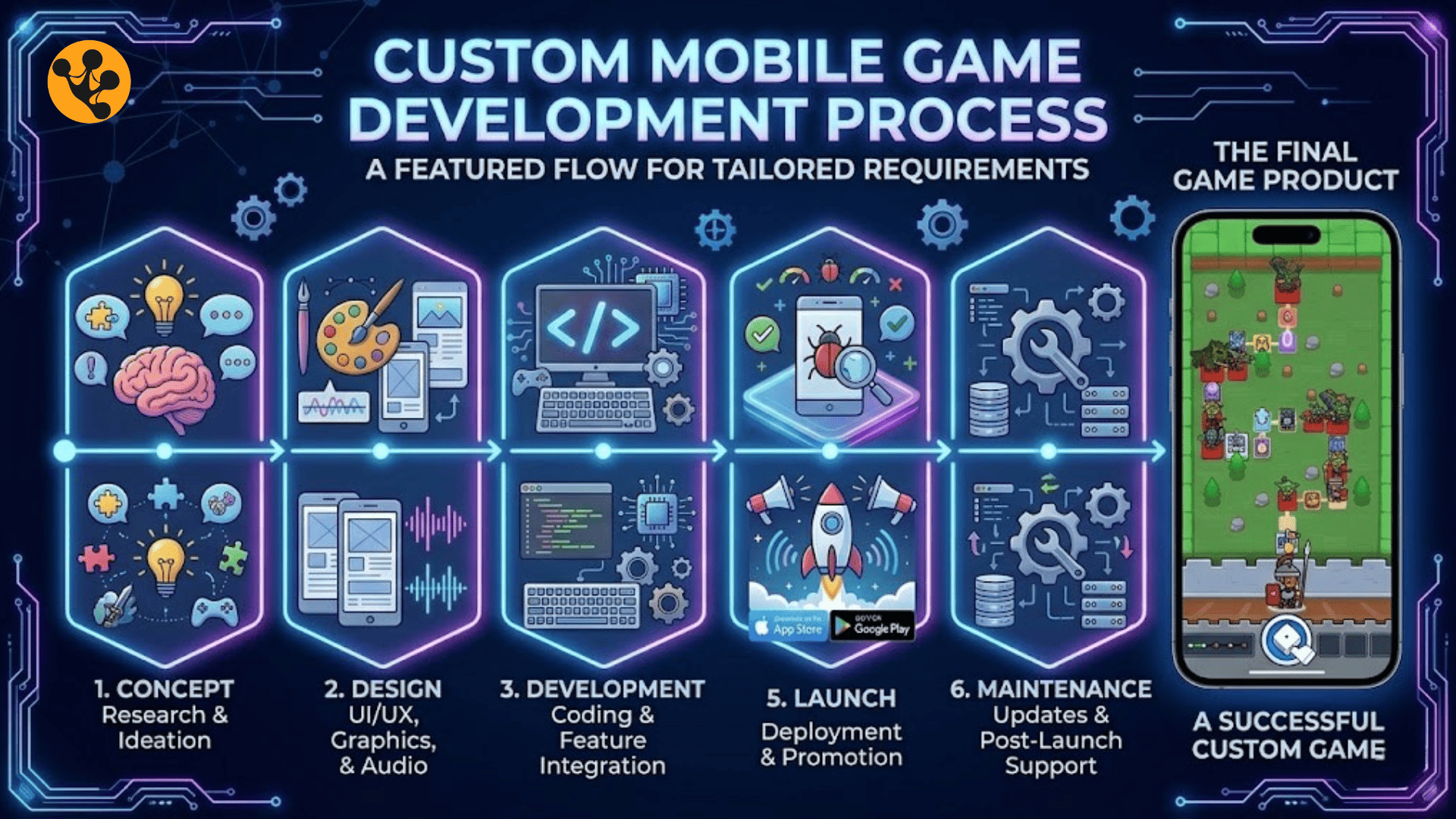
A professional mobile game development process typically includes the following stages, each with its own costs and requirements:
- Concept & Planning Phase: This is the initial step where ideas are formed, market research is conducted, target audiences and core features are defined, and a detailed project plan is created. Costs at this stage typically relate to consultation, analysis, and game design document (GDD) creation.
- Design Phase (UI/UX, Graphics, Sound): The design team creates the user interface (UI), user experience (UX), graphic assets (characters, environments, effects), and sound for the game. The complexity of the design directly impacts costs.
- Development Phase (Programming, Feature Integration): Programmers bring ideas and designs to life by writing code, building gameplay mechanics, integrating features, APIs, and backend systems. This is often the most expensive phase.
- Testing & QA Phase: The game undergoes thorough testing to detect and fix bugs, ensuring stability, performance, and user experience. Costs are associated with QA personnel and testing tools.
- Deployment & Launch Phase: After testing is complete, the game is optimized and submitted to app stores (App Store, Google Play). Costs may include developer registration fees and launch preparation activities.
- Maintenance & Updates Phase: After launch, the game requires maintenance, bug fixes, new feature updates, or compatibility adjustments for new operating system versions. This is a crucial recurring cost to sustain the game’s lifespan and appeal.
Hyper-Casual Game Development Costs: Detailed Pricing for Businesses in 2026
Hyper-casual game development costs for businesses in 2026 typically range from $6,000 to over $40,000. This budget can be flexibly adjusted, depending on the complexity of the graphics mechanics and accompanying feature systems.
Many businesses today want to leverage the power of gaming to enhance brand awareness. However, the biggest barrier often lies in the initial investment budget and project implementation time. Pouring tens of thousands of dollars into a heavy-duty game sometimes comes with uncontrollable risks. That is why the Hyper-casual genre has become an ideal balanced solution. This game series helps brands reach millions of users with optimal costs, while significantly shortening the payback period.
What is a Hyper-casual Game?
Hyper-casual games are a minimalist electronic game genre, possessing intuitive control mechanics and extremely short gameplay loops. The core objective of this game series is to provide instant, accessible, and highly viral entertainment experiences without requiring users to read complex instructions.
Characteristics and Business Application Goals of Hyper-casual Games
Hyper-casual games are designed with distinct characteristics to serve both players and commercial objectives.
Key Characteristics:
-
Streamlined Gameplay: Usually requires only 1-2 basic actions like tapping or swiping the screen.
-
Minimalist Graphics: Focuses on clarity and visual appeal, without cramming in excessive effects.
-
Flexible Playtime: Each session happens in a flash, lasting from a few seconds to a few minutes.
-
High Replayability: Encourages users to experience the game over and over again throughout the day.
-
Advertising Optimization: The primary revenue stream comes from displaying in-game ads.
Business Application Goals:
-
Expand Brand Awareness: Reach a massive user base with low marketing costs.
-
Customer Acquisition Funnel: Direct players’ attention to the business’s core products and services.
-
Collect User Data: Analyze the behaviors, habits, and preferences of the target audience.
What Factors Affect Hyper-Casual Game Development Costs?
The investment budget will be highly individualized for each project. Actual costs are typically driven by the following core elements:
-
Graphics Quality: Choosing simple 2D designs or adding special effects will largely determine the cost.
-
Gameplay Mechanics: The level of uniqueness and the number of variations in the game’s loops.
-
Additional Features System: Costs will increase if integrating leaderboards, social media sharing features, or in-game events.
-
Ad Optimization: The process of embedding advertising SDKs, optimizing placements, and controlling display frequency.
How Much Does It Cost to Develop a Hyper-casual Game in 2026?
Below is a summary table of reference budgets based on the scale and complexity of the project (calculated at an estimated exchange rate of 25,000 VND = 1 USD):
| Project Scale | Key Features | Estimated Cost (USD) |
| MVP (Minimum Viable Product) | 1 single core mechanic, extremely simple graphics, no complex social features. | $6,000 – $12,000 |
| Medium Scale | A few mechanic variations, more polished graphics, basic leaderboard/sharing integration. | $12,000 – $24,000 |
| Complex Scale | Multiple levels, deep analytics/advertising platform integration, in-game events. | $24,000 – $40,000+ |
(Note: The above pricing is for reference purposes. The actual budget will vary based on detailed requirements and the production agency at the time of implementation).
Should Businesses Invest in Hyper-casual Games?
Investing in Hyper-casual games delivers a rapid ROI (Return on Investment) due to short development times and high viral potential. This is an effective tool for boosting engagement growth and testing new marketing campaigns with minimal risk.
To optimize capital, businesses should start deploying from an MVP (Minimum Viable Product) version. Launching a game with minimalist core mechanics allows you to measure market reactions and gather real-world user behavioral data. Once the product has proven its appeal and user retention capabilities, businesses can confidently reinvest to expand features and upgrade graphics, thereby exploding ad revenue and increasing long-term brand value.
Hyper-casual vs Gamification: Strategic Choices for Businesses
Choosing between Hyper-casual games and Gamification is a strategic crossroads for any brand. This decision directly dictates your budget, target audience, and long-term business objectives.
Hyper-casual vs Gamification: Core Differences
Hyper-casual games deliver instant entertainment to attract massive audiences and increase brand awareness rapidly, featuring low costs and fast deployment. Conversely, Gamification applies game mechanics to non-game contexts to drive behavioral change, enhance loyalty, and boost performance, requiring higher investment and longer development.
Detailed Comparison: Objectives, Costs, and ROI
Understanding the structural differences is crucial for a successful campaign.
-
Hyper-casual:
-
Objectives & Audience: Targets the general public for quick entertainment, brand awareness, and ad revenue.
-
Cost & Time: Low to medium budget; rapid development (weeks to a few months).
-
ROI: Driven by ad revenue, viral user growth, and massive market reach.
-
-
Gamification:
-
Objectives & Audience: Targets existing customers, employees, or partners to build loyalty and improve training.
-
Cost & Time: Medium to high budget (due to custom integration); longer development (months to over a year).
-
ROI: Achieved through increased sales, reduced operational costs, and high retention rates.
-
Strategic Advice: When to Choose Which?
Your choice should align tightly with your immediate business needs and user engagement goals.
Opt for a Hyper-casual approach when you need a fast-paced, low-risk marketing push. It is highly effective for launching new products or acquiring a massive volume of new users at a minimal cost.
Choose Gamification when your goal is to cultivate deep, long-term engagement. It is the perfect tool for improving internal HR training, boosting employee performance, or collecting purposeful data from your existing user base.
For example, a retail brand can use a Hyper-casual game to generate millions of downloads during a holiday promo. Meanwhile, a tech company applying Gamification to its internal system can help employees complete training 30% faster and improve test scores by 20%, significantly optimizing operational costs.
Criteria for Choosing a Reputable Mobile Game Development Partner
Selecting the right mobile game development partner is a key factor determining project success. Here are important criteria businesses should consider:
- Experience and Expertise:
- Review their portfolio, completed projects, and case studies related to Hyper-casual or Gamification.
- Evaluate their industry experience, especially with projects of similar scale and requirements.
- Transparent and Professional Workflow:
- The partner should have a clear development process, from ideation to deployment and maintenance.
- Demonstrate effective communication, regular progress reporting, and readiness to listen to client feedback.
- Consultation and Post-Launch Support:
- A good partner not only fulfills requirements but also offers strategic advice to optimize the product.
- Ensure there are warranty, maintenance, and technical support policies after the game’s launch.
- Team and Technology Used:
- Assess the capabilities of their programmers, designers, and QA team.
- Determine if the technologies and tools they use are suitable for project requirements and market trends.
- Reputation and Client Testimonials:
- Refer to reviews and testimonials from previous clients.
- Check the partner’s reputation in the market and on industry forums.
In 2026, the custom mobile game market continues to open up significant opportunities for businesses. Whether you are seeking a Hyper-casual solution for rapid engagement growth and brand awareness, or a complex Gamification system to optimize processes and build loyalty, understanding cost factors and the development process is paramount. A wise investment decision in mobile games is not just an expense but a long-term strategy that delivers real value and sustainable ROI.
To receive a personalized custom mobile game development quote tailored to your business’s specific goals and budget, do not hesitate to contact us. Our team of experts is ready to consult and accompany you in creating groundbreaking mobile game solutions.
Leave a comment