

Success Blueprint: Increase Game Revenue by 150% with GaaS Model – From Concept to Implementation
The gaming industry is experiencing a historic revolution with the shift from one-time product sales to the Game-as-a-Service (GaaS) model – a continuous service model that delivers the potential to increase revenue by 150%. The global GaaS market reached $298.98 billion in 2024 and is projected to surge to $847.6 billion by 2035 with a growth rate of 14.95% annually.
Game-as-a-Service (GaaS): Revolution in the Gaming Industry
Game-as-a-Service (GaaS) is a business model that allows game developers to generate continuous revenue instead of collecting payment only once when selling the product. Unlike traditional models, GaaS maintains player engagement in an endless lifecycle through regular content updates, new features, and diverse monetization mechanisms.
This change is not merely a new distribution method but a profound revolution in how organizations design, operate, and monetize user interactions. Analysis data shows:
- GaaS titles generate 43% higher daily active users (DAU) compared to traditional games
- The continuous interaction model increases average playtime by 41%
- Over 63% of global gamers currently participate in at least one GaaS platform
- User retention rates are 41% higher compared to one-time purchase games
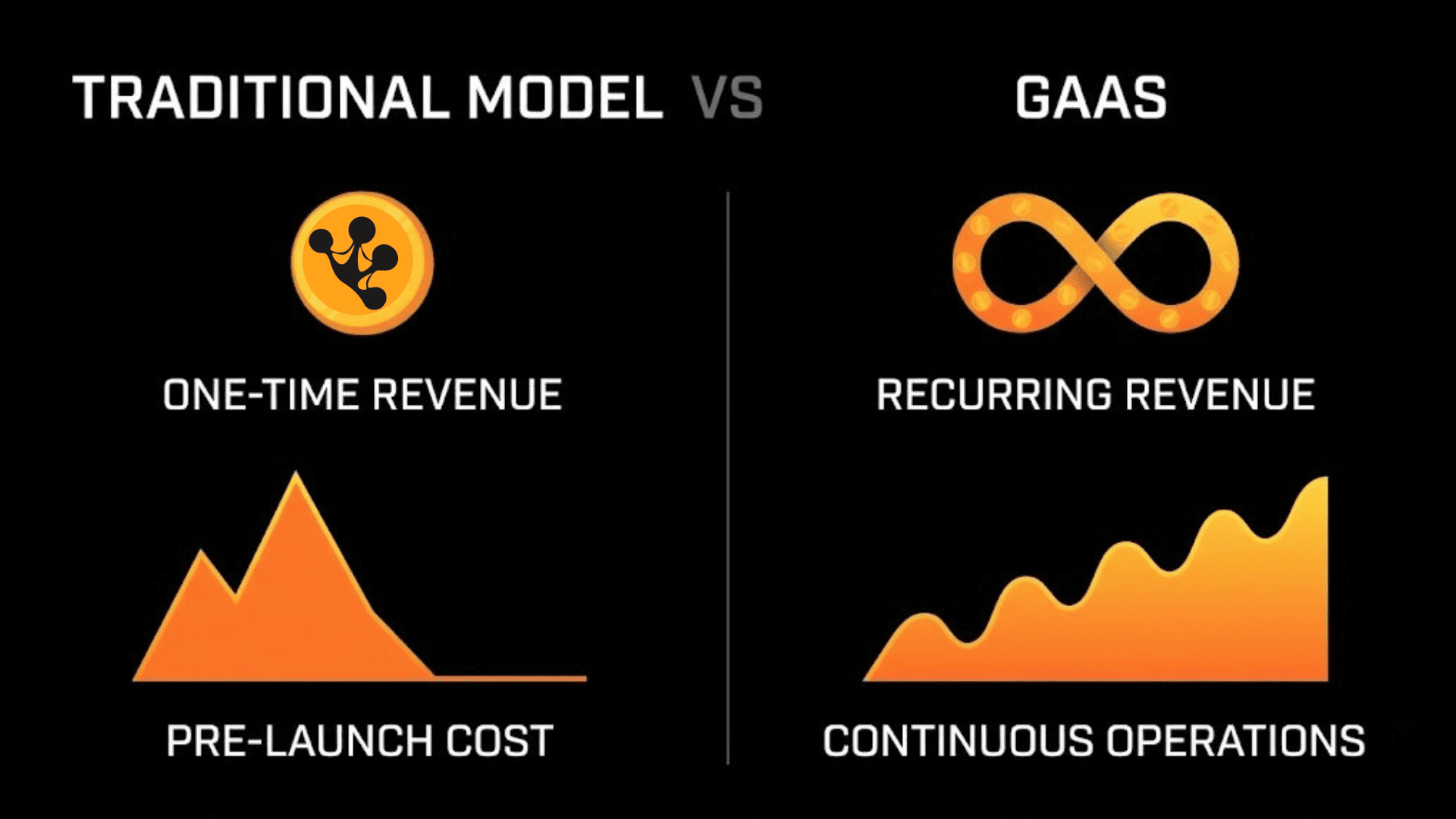
Traditional Model vs GaaS Comparison
The core difference between the two models is clearly reflected in revenue structure and engagement strategy:
Traditional Model (Games as Product):
- One-time revenue from product sales
- Short-term engagement, declining after launch
- Development costs concentrated in pre-launch phase
- Difficult to predict and control long-term revenue
GaaS Model:
- Continuous revenue from multiple sources (subscription, in-app purchase, battle pass)
- Long-term engagement with community building and live operations
- Development costs distributed evenly throughout product lifecycle
- Ability to optimize and expand revenue over time
Case Study: 150% Revenue Increase Through GaaS Implementation
A real case study from Ukrainian retailer Stylus clearly demonstrates the potential for 150% revenue growth when applying GaaS principles and gamification. Before the campaign, Stylus’s email channel only generated 15% of total monthly revenue and was in a stagnant state.
Initial challenges:
- Low email open rates due to “banner blindness”
- Customers lacked motivation to interact with the brand
- Email marketing revenue stagnated at 15%
- Need for new methods to activate engagement
Implementation strategy: Stylus tested three gamification mechanisms with different complexity levels over one year, using the Yespo CDP platform to track and analyze effectiveness.
Detailed Business Model Analysis
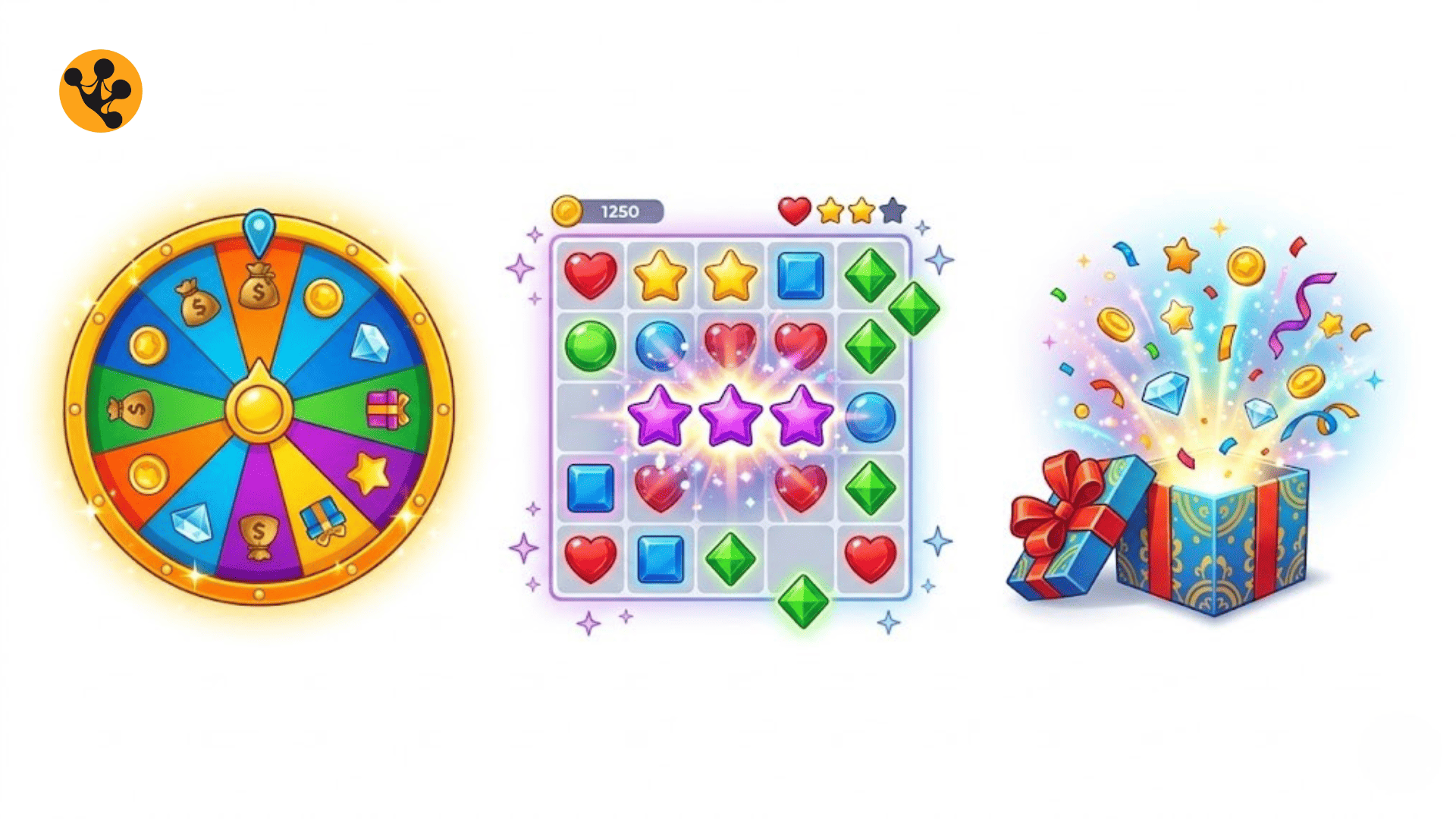
Results from testing three gamification mechanisms showed clear differences in effectiveness:
1. Roulette – Highest effectiveness:
- Participation rate: 2.65%
- Conversion rate: 77%
- Revenue growth: +176%
- Channel growth: 4.0x
2. Match Three:
- Participation rate: 0.39%
- Conversion rate: 40%
- Revenue growth: +107%
- Channel growth: 2.4x
3. Gift Box:
- Participation rate: 0.17%
- Conversion rate: 56%
- Revenue growth: +49%
- Channel growth: 2.4x
The new revenue structure is based on the principle of “low cognitive effort, high conversion effectiveness”. The Roulette mechanism with minimal interaction requirements and immediate reward capability delivered superior results.
Lessons Learned and Key Takeaways
From the perspective of an expert who closely monitored the execution of the Stylus (Ukraine) project—which recorded an impressive 150% revenue surge through Gamification-as-a-Service (GaaS)—it is evident that this success was no accident. It was the result of a sophisticated operational strategy centered on redefining how users interact with an e-commerce platform.
The following is a detailed analysis of the key execution factors from an objective standpoint:
Core Execution Decisions
During implementation, the project team prioritized the elimination of psychological barriers, transforming the shopping journey into a series of engaging experiences:
- Simplifying Participation (Frictionless Entry): This strategy focused on removing hesitation at the first touchpoint. Instead of requiring tedious registration upfront, the project allowed users to engage with gamified elements (such as “Spin the Wheel” or “Gift Boxes”) immediately. Personal information was only requested once the user felt a sense of “ownership” over a reward, causing conversion rates from casual visitors to leads to skyrocket.
- Providing Immediate Gratification: The system was configured to respond instantly to user actions. A discount code that worked immediately or a gift added directly to the cart created a powerful dopamine hit. This motivated customers to complete their checkout quickly to realize the value they had just “won.”
- The “Second Chance” Mechanism for Data Enrichment: This was a brilliant tactical move. When a user did not win on their first attempt, the system offered a “second chance” in exchange for a small action, such as signing up for a newsletter or sharing the link on social media. This enabled the business to collect voluntary customer data naturally, without being intrusive.
- Prioritizing Emotional Experience (UX over Tech): Rather than getting bogged down in complex backend algorithms, the project focused on a vivid User Interface (UI). Smooth animations, winning sound effects, and the thrill of the “game” were prioritized because these are the elements that directly keep users on the website longer.
Mistakes to Avoid During Operation
Through real-world implementation, experts identified several “performance traps” that businesses often fall into:
- Multi-layered Interaction Processes: Complexity is the enemy of conversion. Any unnecessary intermediate step causes user impatience and leads to drop-offs in the sales funnel.
- Underestimating the Power of Instant Feedback: A Gamification system that suffers from delays in notifying results or sending reward codes breaks the user’s “flow” of excitement, ultimately damaging the program’s credibility.
- Neglecting Mobile Optimization: With the vast majority of e-commerce traffic now coming from smartphones, failing to optimize display and loading speeds for mobile devices will cause a project to lose a significant portion of potential revenue.
- Lack of Detailed Data Analysis: Without measuring where users drop off or which reward types stimulate the most purchasing, a business cannot optimize its budget or campaign effectively.
Key Pillars of Sustainable Success
To maintain effectiveness and achieve that 150% growth figure, the project adhered to fundamental principles:
- Design Based on Behavioral Psychology: The project successfully applied psychological effects such as FOMO (Fear Of Missing Out) and the Endowment Effect (the feeling of already owning something) to guide customer behavior naturally.
- Balancing Reward Value vs. Acquisition Cost (CAC): The execution team carefully calculated reward values to ensure they were attractive enough to entice users while remaining within profit margins, ensuring every interaction contributed to actual bottom-line growth.
- Real-time Measurement Systems: The ability to track data in real-time allowed the operational team to adjust game parameters (such as win rates or prize types) instantly to match market dynamics.
- Optimization Based on Feedback Data: Every strategic shift was backed by user behavior analytics, ensuring the project remained aligned with actual customer needs.
The success of Stylus proves that when Gamification is executed with a user-centric mindset and data-driven management, it becomes a powerful engine for driving business revenue.
12-Month Roadmap: From Concept to Implementation
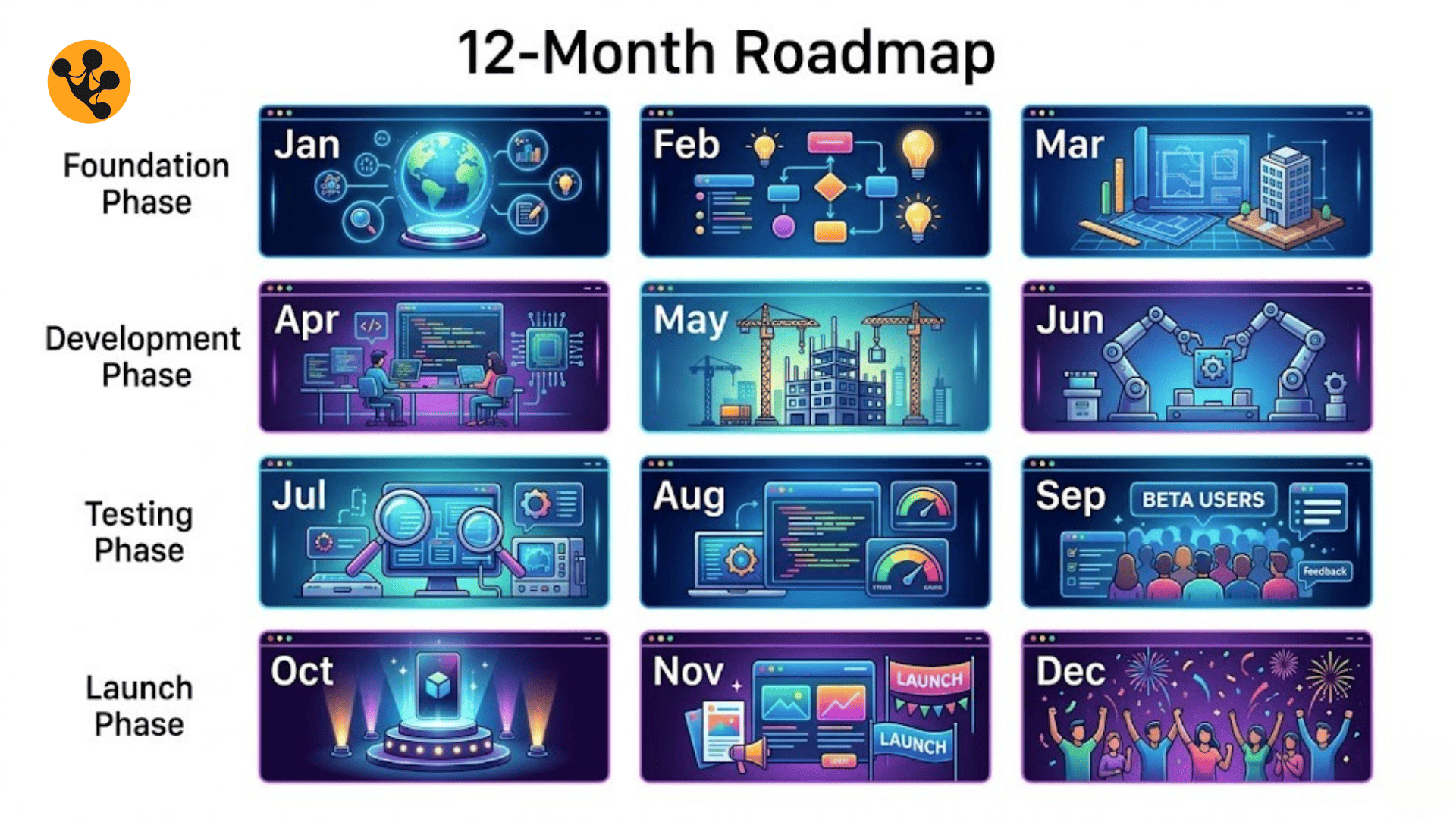
Converting to the GaaS model requires a detailed and systematic roadmap. Below is a 12-month roadmap designed to achieve the 150% revenue increase goal:
Phase 1-3: Assessment and Planning
- Month 1: Current state analysis, technical stack assessment, and user behavior evaluation
- Month 2: Game economy design and monetization strategy
- Month 3: Technology platform selection and development team building
Phase 4-6: Development and Testing
- Month 4-5: Core GaaS features development and backend infrastructure
- Month 6: Alpha testing with internal team and closed beta
Phase 7-9: Soft Launch and Optimization
- Month 7: Soft launch in test market with sample user base
- Month 8-9: Collect feedback, optimize mechanics and user experience
Phase 10-12: Full Launch and Scaling
- Month 10: Official launch with full marketing campaign
- Month 11-12: Scale up operations, expand user acquisition, and optimize KPIs
Specific Milestones and Deliverables
Monthly checklist:
Month 1-3 (Foundation Phase):
- Complete market research and competitor analysis
- Build technical architecture document
- Finalize monetization model and pricing strategy
- Setup development environment and CI/CD pipeline
Month 4-6 (Development Phase):
- Implement core gameplay loop with GaaS elements
- Develop user progression system and reward mechanics
- Integration with payment gateway and analytics tools
- Complete alpha build and internal QA
Month 7-9 (Testing Phase):
- Soft launch with 1000-5000 users
- A/B testing for key conversion funnels
- Optimize server performance and scalability
- Refine user onboarding flow
Month 10-12 (Launch Phase):
- Full market launch with comprehensive PR campaign
- Scale user acquisition campaigns
- Monitor and optimize key performance indicators
- Plan for post-launch content updates
KPIs to track:
- Daily Active Users (DAU) and Monthly Active Users (MAU)
- Average Revenue Per User (ARPU)
- Customer Lifetime Value (CLV)
- Retention rates (Day 1, 7, 30)
- Conversion rate from free-to-paid users
Technology and Platform Selection
Major platform comparison:
Azure PlayFab:
- Cost: $0.10-0.15 per MAU
- Advantages: Deep Microsoft ecosystem integration, strong analytics
- Suitable for: Mid-to-large scale games focusing on PC/Console
AWS GameLift:
- Cost: $0.08-0.12 per MAU + infrastructure costs
- Advantages: High scalability, global infrastructure
- Suitable for: High-concurrency multiplayer games
Unity Gaming Services:
- Cost: $0.05-0.10 per MAU
- Advantages: Native Unity engine integration, easy implementation
- Suitable for: Mobile and indie game development
Game architecture evaluation criteria:
- Scalability: Ability to handle exponential user growth
- Latency: Response time under 100ms for core features
- Cost efficiency: Total cost of ownership in first 3 years
- Security: GDPR compliance and local data protection laws
- Integration: Compatibility with existing development tools
KPI Measurement and ROI Framework
To achieve the 150% revenue increase goal, building an accurate effectiveness measurement system is crucial. This framework provides tools and methods to track progress scientifically.
Most important KPIs for GaaS:
- Revenue Metrics: Monthly Recurring Revenue (MRR), Annual Recurring Revenue (ARR)
- User Engagement: Session duration, Sessions per user, Feature adoption rate
- Monetization: Conversion rate, Average Revenue Per Paying User (ARPPU)
- Retention: Cohort analysis, Churn prediction, Reactivation rate
Review frequency is designed cyclically: Daily monitoring for critical metrics, Weekly deep-dive analysis, Monthly strategic review, and Quarterly planning sessions.
Core Financial Metrics
Monthly Recurring Revenue (MRR):
- Formula: (Number of paying users × Average revenue per user) / month
- Target: 15-20% increase monthly to achieve 150% growth in 12 months
- Tracking: Real-time dashboard with breakdown by user segments
Customer Lifetime Value (CLV):
- Formula: (Average purchase value × Purchase frequency × Customer lifespan)
- Optimization: Focus on extending lifespan through retention strategies
- Benchmark: CLV must be at least 3:1 higher than Customer Acquisition Cost (CAC)
Customer Acquisition Cost (CAC):
- Formula: Total marketing spend / Number of new customers acquired
- Target: 10-15% reduction each quarter through campaign optimization
- Tracking: Breakdown by acquisition channels to optimize budget allocation
Churn Rate and Retention Metrics:
- Monthly churn rate: % of users who stop using within the month
- Cohort retention: Tracking retention by user groups over time
- Predictive churn modeling: Using machine learning to predict at-risk users
Practical Tools and Templates
Excel Template for Financial Model:
- Revenue forecasting model with multiple scenarios (conservative, realistic, optimistic)
- Cash flow projection with monthly breakdown
- Unit economics calculator for different user segments
- ROI calculator with sensitivity analysis
Dashboard Setup Guide:
- Real-time revenue dashboard using Google Analytics 4 and custom tracking
- User behavior analytics with heatmaps and funnel analysis
- A/B testing dashboard to track experiment results
- Customer support metrics to monitor user satisfaction
Market Benchmark Data:
- Average ARPU by game genres: Casual ($2-5), Mid-core ($8-15), Hardcore ($20-50)
- Industry retention benchmarks: Day 1 (70-80%), Day 7 (20-30%), Day 30 (8-15%)
- Conversion rates: Free-to-paid (2-5%), In-app purchase (10-20% of paid users)
Risk Assessment and Prevention Strategies
GaaS implementation comes with many potential risks that need proactive identification and management. This risk assessment framework ensures project success and minimizes potential losses.
Technology and Technical Challenge Risks:
- Server scalability issues: System inability to handle user surge
- Data security vulnerabilities: Privacy violation and data breach risks
- Integration complexity: Difficulties integrating multiple third-party services
- Performance optimization: Game performance not meeting user expectations
Market and Competition Risks:
- Market saturation: Too many competitors in the same niche
- User acquisition cost inflation: High marketing costs
- Platform policy changes: App Store/Google Play guideline changes
- Economic downturn impact: Recession affecting spending behavior
Financial and Cash Flow Risks:
- Development cost overrun: Budget exceeding projections
- Revenue projection mismatch: Actual revenue lower than forecast
- Working capital shortage: Lack of operating capital
- Currency fluctuation: Exchange rate risks with international markets
Risk Mitigation Strategies:
- Implement agile development methodology for rapid iteration
- Diversify revenue streams instead of relying on single monetization model
- Build strong community engagement to reduce churn risk
- Maintain 6-month operating expense reserve
- Regular security audits and compliance checks
Risk Assessment Checklist
Risk Assessment Matrix:
High Impact, High Probability:
- Server downtime during peak hours
- Major competitor launching similar product
- Key team member departure
High Impact, Low Probability:
- Platform ban or policy violation
- Major security breach
- Economic recession affecting user spending
Low Impact, High Probability:
- Minor bugs and performance issues
- Seasonal revenue fluctuations
- Small-scale user complaints
Contingency Planning:
- Technical contingencies: Backup servers, alternative payment providers, rollback procedures
- Financial buffers: 20% budget contingency, multiple funding sources, revenue diversification
- Operational backups: Cross-trained team members, external consultant network, alternative suppliers
GaaS Potential in the Vietnamese Market
The Vietnamese gaming market is entering a strong growth phase with 68% of the population participating in gaming and total revenue reaching $2.8 billion in 2024. This is the ideal time to apply the GaaS model to capitalize on growth opportunities.
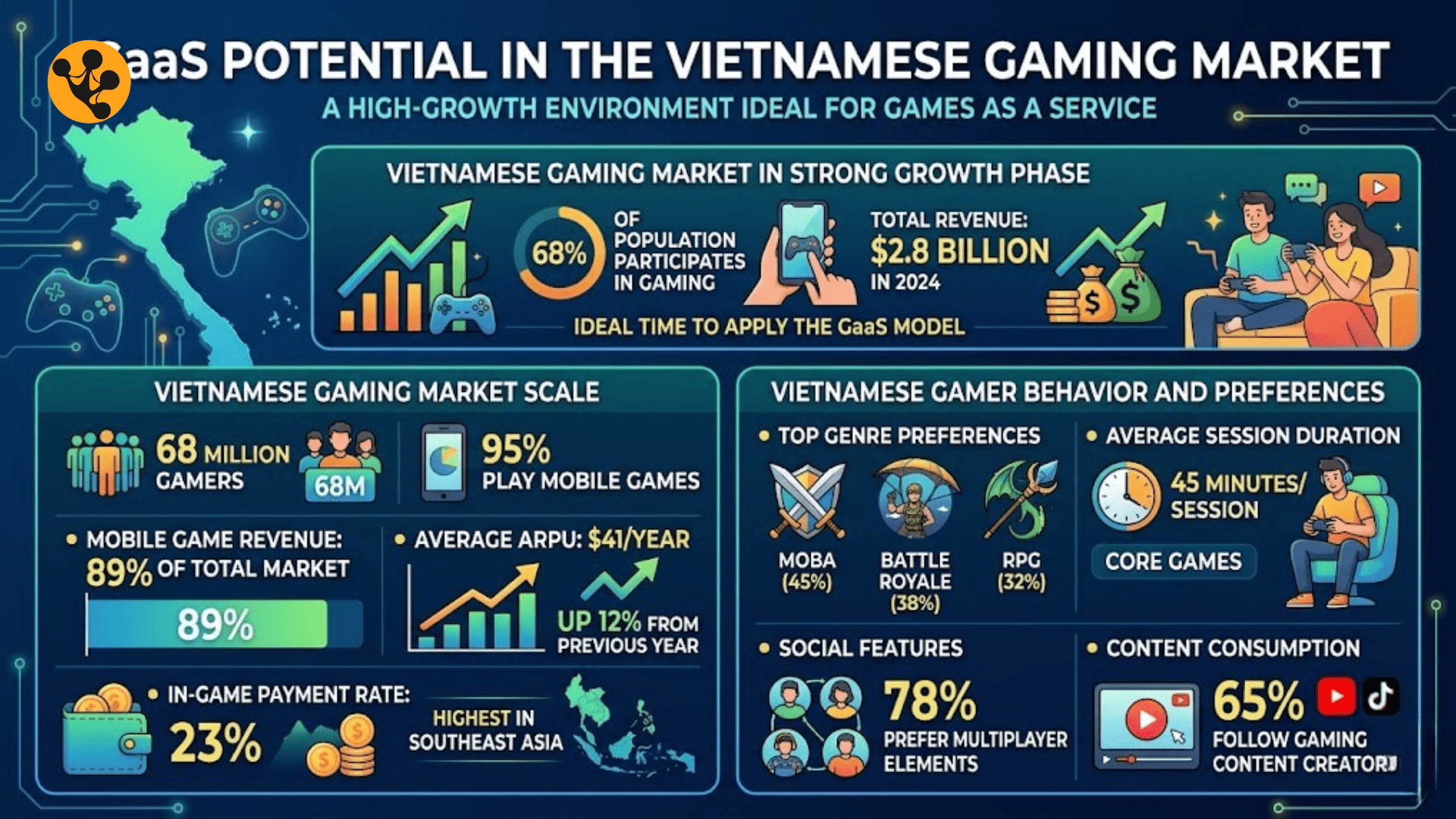
Vietnamese Gaming Market Scale:
- 68 million gamers with 95% playing mobile games
- Mobile game revenue accounts for 89% of total market
- Average ARPU: $41/year, up 12% from previous year
- In-game payment rate: 23%, highest in Southeast Asia
Vietnamese Gamer Behavior and Preferences:
- Genre preferences: MOBA (45%), Battle Royale (38%), RPG (32%)
- Session duration: Average 45 minutes/session for core games
- Social features: 78% of users prefer games with multiplayer elements
- Content consumption: 65% follow gaming content creators on YouTube/TikTok
Success Stories from Vietnamese Games:
- Axie Infinity: Pioneered play-to-earn model, achieved $4.2B transaction volume
- Flappy Bird: Viral success with simple gameplay, $50K/day revenue peak
- ZingPlay: Local social games platform with 100M+ registered users
Local Opportunities and Challenges:
Opportunities:
- Young demographic: 60% gamers under 35 years old
- High smartphone penetration: 84% population ownership
- Growing disposable income: Middle class expanding 15%/year
- Government support for digital economy development
Challenges:
- Intense competition from international publishers
- Price sensitivity: Lower ARPU compared to developed markets
- Regulatory uncertainty about gaming content and monetization
- Limited local talent pool for advanced game development
GaaS Localization Strategy
Pricing Strategy Suitable for Purchasing Power:
- Tier pricing: $0.99-2.99 for casual transactions
- Premium packages: $9.99-19.99 for monthly subscriptions
- Seasonal promotions aligned with local holidays (Tet, Mid-Autumn)
- Student discounts and group purchase incentives
Popular Payment Methods:
- Digital wallets: MoMo (40%), ZaloPay (25%), ViettelPay (20%)
- Mobile carrier billing: Viettel, Vinaphone, Mobifone
- Banking integration: TPBank, Techcombank, VCB
- Cash-based solutions: Payoo, PayME for unbanked users
Content and Gameplay Preferences:
- Vietnamese language localization with proper cultural context
- Local themes: Historical figures, cultural landmarks, traditional festivals
- Social features: Guild systems, friend referrals, community events
- Competitive elements: Leaderboards, tournaments, esports integration
Marketing and Community Building:
- Influencer partnerships with top Vietnamese streamers and content creators
- Social media focus: Facebook (85% reach), TikTok (growing 40%/year)
- Offline events: Gaming cafes, university tournaments, mall activations
- Cross-promotion with popular Vietnamese apps and services
Conclusion: Roadmap to Successful Implementation
The goal of increasing revenue by 150% through the Game-as-a-Service model is not just a theoretical prospect but a practical result that has been proven. Stylus’s case study with 150% revenue growth and 8% monthly customer base increase demonstrates the feasibility of this approach.
Key success factors:
- Simplicity-first approach: Minimize user experience to maximize conversion
- Data-driven optimization: Continuous testing and refinement based on user behavior
- Sustainable monetization: Balance user satisfaction with revenue generation
- Localization strategy: Adaptation for specific market characteristics
Specific next steps for implementation:
- Immediate (Next 30 days): Conduct market research, define target audience, and setup tracking infrastructure
- Short-term (3 months): Develop MVP with core GaaS features, begin closed beta testing
- Medium-term (6 months): Soft launch in test market, optimize based on user feedback
- Long-term (12 months): Full market launch with comprehensive growth strategy
Success of the GaaS model in Vietnam requires combining global best practices with local market insights. With 68 million gamers and the highest in-game payment rate in Southeast Asia, the Vietnamese market is ready for the GaaS revolution.
Take action today: Start by analyzing your current project status, identify opportunities for GaaS integration, and build a detailed roadmap based on the framework presented in this article. The success of 150% revenue growth awaits those determined to implement the right methodology.




Leave a comment